




When Is the Best Time to Install Sod in Edmonton?
Published: February 2026 | Author: Serene Landscaping | Reading time: 6 min
The best windows are late April through June or late August through September, with new sod typically around $1.00 – $2.50 per square foot and re-sodding around $2.50 – $5.50 per square foot.
The right windows: late April through June, or late August through September. Sod installed in these seasons on properly prepared soil establishes quickly, handles Edmonton's climate, and gives you a lawn that lasts.
Most new installs run $1.00 – $2.50 per square foot installed, while re-sodding typically runs $2.50 – $5.50 per square foot because removal and prep are heavier. A typical new build lot or full yard replacement lands between $3,000 – $8,000 depending on size, access, and prep.
Spring vs. Fall: Which One Is Actually Better?
Both windows work. The difference comes down to your priorities.
Spring (late April-June) gives sod the full growing season. Edmonton's soil holds moisture well coming out of winter, which reduces watering pressure in those critical first weeks. The downside: spring is peak season. Contractors book fast in developing areas like Secord, McConachie, and Rosenthal. Pricing reflects demand.
Fall (late August-September) is the underrated choice. Cooler temperatures mean sod is not fighting heat stress while it roots. Annual weeds have finished their cycle, less competition. Fall bookings come in 10-20% cheaper than spring. And here is the part most people do not expect: sod installed in September goes dormant over winter with established roots, then comes out of spring aggressively. It often outperforms spring-installed sod by the following summer.
Hard cutoff for fall: mid-October. After that, ground temperatures drop too fast for roots to establish before freeze.
Summer (July-August) is possible but punishing. You are watering 2-3 times daily for the first two weeks. Miss one day during a July heat wave and you can lose the sod before it roots. Without an irrigation system and a disciplined schedule, wait for fall.
What Sod Installation Actually Costs in Edmonton
- Sod installation (new): $1.00 – $2.50 per sq ft
- Re-sodding (remove and replace): $2.50 – $5.50 per sq ft
- Small front yard (~1,000 sq ft): $1,500 – $3,500
- New build lot completion (grading + sod): $3,000 – $8,000
- Larger yard replacement (3,000+ sq ft): $4,000 – $10,000+
The spread in that per-square-foot range comes from how much topsoil the site needs, whether grading corrections are required, backyard equipment access, and season. Two similar-sized lots can quote $2,000 apart for legitimate reasons.
If you are on a new build and your builder is holding a grading deposit, combining grading and sod in one project is almost always the smarter move. One mobilization, coordinated work, and typically a few hundred dollars saved.
What the Installation Process Looks Like
Good sod installation is mostly preparation. The sod goes down in a day, what happens before determines whether it survives.
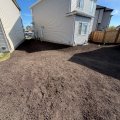
Site prep (day 1-2): Existing grass or weeds removed, soil graded to a minimum 2% slope away from the foundation, quality topsoil spread to 4 inches minimum (6 inches is better in Edmonton's clay). Installing sod over compacted clay without proper topsoil depth is the single most common reason sod fails. Do not let a contractor skip this step.
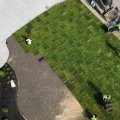
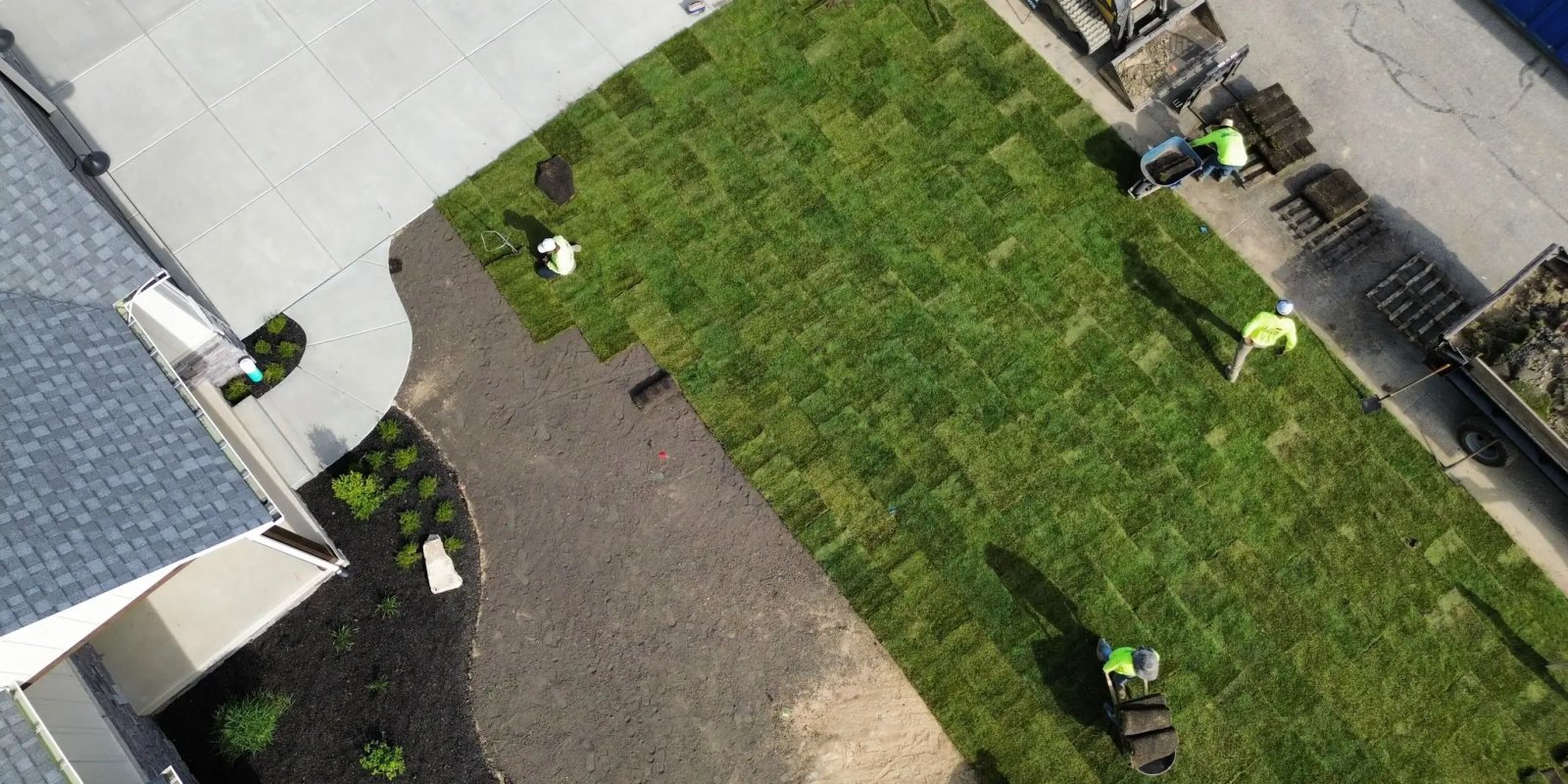
Installation day: Sod arrives fresh and goes down the same day, it cannot sit. Laid in a staggered brick pattern with tight seams, trimmed to edges, rolled for soil contact. First watering happens immediately: soak through to 6 inches.
Weeks 1-2: Twice daily watering, morning and late afternoon. No foot traffic. Check edges daily, they dry out first.
Weeks 3-4: Reduce to once daily, then every other day as roots establish. First mow when grass hits 3–4 inches, blade at 3 inches, sharp.
Weeks 5-8: Normal watering (about 1 inch per week including rain). Full use after 6–8 weeks.
Sod vs. Seed in Edmonton
Seed costs a fraction of sod, $0.10 – $0.30 per sq ft versus about $1.00 – $5.50 depending on whether it is a new install or re-sodding. That gap is real.
But in Edmonton's clay soil, seed comes with real challenges: inconsistent moisture retention for reliable germination, heavy weed competition during establishment, and a timeline measured in months before the lawn is usable. For new builds working against builder deposit deadlines or occupancy permits, seed rarely makes practical sense.
Sod makes sense when you want a finished result quickly, need erosion control, or are working against a deadline. Seed makes sense for small bare patches, overseeding thin areas, or when budget is the only priority and timeline is flexible.
Sod Installation FAQs - Edmonton
What factors should a homeowner weigh when deciding between spring and fall sod installation in Edmonton?
The main variables are budget, timeline pressure, and irrigation availability. Fall is often cheaper and produces strong root establishment, but requires booking before mid-September and accepting that the lawn looks dormant over winter before greening aggressively in spring. Spring gives visible results faster and a full growing season, but costs more and books earlier, especially in high-volume developments like Secord, McConachie, and Windermere.
How does Edmonton's clay-heavy soil affect what happens under new sod and what preparation actually requires?
Clay compacts easily and drains slowly, which creates two problems: roots struggle to penetrate compacted layers, and standing water between sod and soil causes rot. Quality topsoil at minimum 4 inches, ideally 6, acts as a transition layer that lets roots establish before hitting clay. Grading the site first matters too, because clay does not forgive poor drainage the way sandier soils do.
What does a homeowner need to understand about watering new sod in Edmonton's specific climate?
Edmonton's dry stretches in June and July pull moisture out of new sod faster than people expect, especially on south-facing yards. The first two weeks require consistent twice-daily watering regardless of how the grass looks. Once sod turns yellow from drought stress in that window, recovery is difficult. Spring and fall installations have a natural buffer from cooler temperatures and more consistent rainfall, which is a real advantage over summer installs.
How does combining final grading and sod in one project affect timeline, cost, and outcome for new build homeowners?
Doing both together saves on mobilization since crew and equipment are already on site. It also ensures topsoil depth and grading are done to a consistent standard. When separate contractors handle them, there is sometimes a mismatch. For new builds coordinating occupancy permit timelines, one combined visit reduces scheduling complexity significantly.
What should a homeowner realistically expect the lawn to look like at 30, 60, and 90 days after installation?
At 30 days, sod should be rooted and past the fragile stage, a gentle tug should meet resistance, and color should be consistent. At 60 days, the lawn handles normal foot traffic and looks established. At 90 days for spring installs, the lawn performs close to its long-term potential. Fall installs at 90 days will look dormant and brown, that is normal, not failure. Roots are established underground.
What are the most common reasons professionally installed sod fails in Edmonton?
Insufficient topsoil depth, poor grading that allows water to pool under the sod, and sod that sat too long after harvest before installation. A contractor worth hiring confirms topsoil depth in writing, shows you how the site will be graded before sod goes down, and schedules delivery for installation day rather than letting sod sit overnight.
How does lot access in newer Edmonton developments affect pricing and what can homeowners do to help?
Tight backyard access, no gate wide enough for equipment, forces manual material delivery and increases cost. In dense new developments like parts of Rosenthal or Summerside, this can add $300 – $800 to a project. Before getting quotes, measure your gate width and note whether a skid steer (about 6 feet wide) can access the backyard. Contractors give far more accurate numbers with that information upfront.
If you are ready to schedule sod installation, we are here to help.
Contact Serene Landscaping today for a free, on-site sod installation quote!