




How Much Does a Patio Cost in Edmonton?
Published: February 2026 | Author: Serene Landscaping | Reading time: 7 min
Most paving stone patios in Edmonton run about $35 – $45 per square foot installed, and a typical 200–300 sq ft patio lands around $7,000 – $13,500.
That includes excavation, compacted gravel base, bedding sand, interlocking pavers, edge restraints, and polymeric sand. A 200–300 sq ft backyard patio, the most common residential size, lands between $7,000 and $13,500 depending on materials, design, and site conditions.
Concrete is cheaper upfront. Natural stone costs more. Everything is driven by one factor most homeowners do not think about until after they have had a bad experience: the base.
Paving Stone Patio Costs in Edmonton
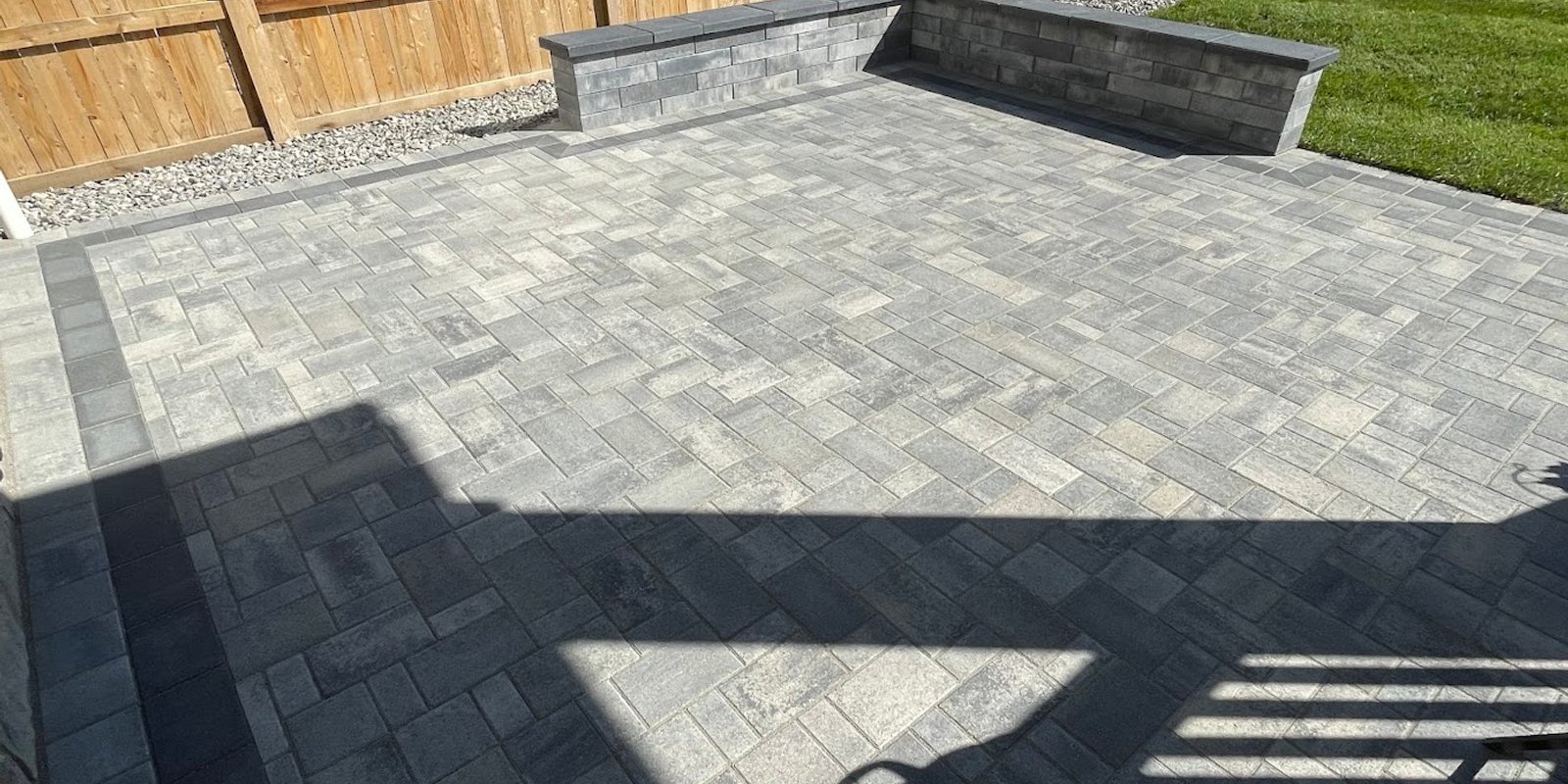
Interlocking pavers are the dominant choice for Edmonton patios, and with good reason. They outlast poured concrete in freeze-thaw conditions, individual stones are replaceable if something shifts, and the style range is wide.
- Small patio (100–150 sq ft): $3,500 – $6,750
- Medium patio (200–300 sq ft): $7,000 – $13,500
- Large patio (300–500 sq ft): $10,500 – $22,500
- Per square foot installed: $35 – $45
The range is real. A straightforward rectangular patio with standard concrete pavers and easy equipment access sits near $35/sq ft. A curved design with premium imported pavers, a border detail, and restricted backyard access pushes toward $45/sq ft and sometimes beyond.
Concrete Patio Costs in Edmonton
Concrete is a legitimate option, cleaner upfront price, works well when built correctly.
- Broom finish concrete: $11 – $18 per sq ft installed
- Exposed aggregate: $18 – $25 per sq ft installed
- Stamped concrete: $20 – $30+ per sq ft installed
The honest trade-off: concrete in Edmonton's climate cracks. Not if, when. Without proper control joints and base preparation, the freeze-thaw cycle will find the weak points. Concrete is also harder to repair than pavers, a cracked slab is a significant fix, whereas a shifted paver stone is a 10-minute repair.
The Base: Where Patios Are Won or Lost
Edmonton goes from -30C to +30C. That temperature swing is the real test for any patio.
A properly built paving stone patio needs 6–8 inches of compacted Class II gravel beneath it, deeper than what is standard in warmer climates. This is what prevents frost heave from pushing stones out of level over winter. It is also the most common place contractors cut corners to lower their quote.
Two quotes for the same patio can be thousands of dollars apart because one specifies 4 inches of base and one specifies 8. Those are not equivalent quotes. Ask every contractor: what is your base depth and material? If they cannot answer specifically, that is your answer.
What Pushes Costs Higher
Materials. Standard concrete pavers: $4 – $8 per sq ft. Premium imported pavers with texture and color variation: $10 – $18+ per sq ft. Material choice alone can shift total project cost by 20-30%.
Design complexity. Straight rectangular patios are the most efficient to build. Curved edges, circular features, herringbone patterns, and inlaid borders add cutting time, labor, and material waste. Budget $500 – $2,000 extra for significant design complexity.
Site access. No gate, narrow passage, or mature landscaping blocking the backyard means manual material delivery, which adds cost across every element of the project. Measure your gate width before getting quotes and include it upfront. In established Sherwood Park neighbourhoods like Heritage Hills and Lakeland Ridge, or tight new-build lots in Secord and Rosenthal, restricted access is one of the most consistent cost variables.
Add-ons. Built-in fire pit: $1,500 – $4,000. Steps and landings: $500 – $2,000. Retaining wall integration: $45 – $85 per sq ft of wall face. Landscape lighting: $500 – $3,000. Seat walls: $50 – $100 per linear foot.
Season. Spring and summer are peak. Fall installs (September-early October) often come in 10-20% cheaper. The work is identical, the discount reflects demand, not quality.
What the Installation Process Looks Like
A mid-size patio typically takes 3–5 days start to finish.
Day 1: Layout and excavation. The footprint is marked, existing material removed, site dug to depth, typically 10–12 inches below final grade to allow for base and bedding layers.
Day 2: Base installation. Class II gravel goes in layers, each compacted with a plate compactor. Edge restraints set the perimeter.
Day 3: Bedding sand screeded over the base. Pavers laid in pattern, cut to fit edges and obstacles.
Day 4: Polymeric sand swept into joints and activated with water. Final compaction pass. Cleanup.
The patio is usable the same day. Polymeric sand needs 24 hours to fully cure before heavy use.
3-Year Workmanship Warranty
All Serene Landscaping paving stone patios come with a 3-year workmanship warranty, covering base preparation, stone settling caused by the installation, edge restraint integrity, and structural performance. No deposit required to start.
A warranty that covers the base tells you whether a contractor actually stands behind how the work was built, not just how it looks on day one.
Patio FAQs - Edmonton
What does a realistic budget look like at different price points, and what level of finish does each range actually get you?
At $7,000 – $10,000, you are getting a well-built medium patio (200–250 sq ft) with standard concrete pavers, a proper base, and clean edges. At $10,000 – $15,000, the same footprint can include premium pavers with color variation, a border detail, and one add-on like steps or a simple seat wall. Above $15,000, you are into larger footprints, complex patterns, or integrated features like a fire pit or lighting. Base quality and installation should be consistent across all price points, what changes is material selection and scope.
How does Edmonton's climate specifically affect patio design decisions compared to warmer cities?
Edmonton swings 60C between its coldest and hottest points. A patio here needs 6–8 inches of compacted granular base to prevent frost heave, that is deeper than what is standard where winters are milder. Drainage slope also matters more, because standing water that freezes under pavers expands and shifts them. Contractors without Edmonton-specific experience often underestimate both the base depth and drainage requirements.
What are the right questions to ask when comparing patio quotes to make sure you're comparing equivalent work?
Ask each contractor: What is the base depth and material? (Should be 6–8 inches of Class II gravel.) Does the quote include polymeric sand and edge restraints? What paver brand and product is specified? What does the warranty cover, base and structure, or just surface? What happens if pavers shift within the warranty period? Two quotes that differ by $3,000 on the same patio are almost always specifying different base depths. That is the most common hidden variable.
How does backyard access in Edmonton's neighbourhoods affect patio pricing?
Older neighbourhoods in Sherwood Park (Heritage Hills, Lakeland Ridge) and established areas of Edmonton often have narrow gate access or mature landscaping limiting equipment movement. Newer developments like Secord, Windermere, or Summerside sometimes have temporary construction fencing still in place. Either situation adds manual labor for material delivery. Before getting quotes, measure your gate width and note whether a skid steer, about 6 feet wide, can access the yard. Contractors price access difficulty into quotes; accurate information upfront leads to accurate numbers.
What should a homeowner understand about patio warranties to know whether they're meaningful in Edmonton's conditions?
A surface warranty that covers pavers but not the base is close to useless in Edmonton, most failures start in the base, not the stones. A meaningful warranty covers workmanship on the base, structural settling caused by the installation, and edge restraint integrity. Get the warranty in writing before work starts and confirm it covers both materials and labor for any corrections.
How does combining a patio with other landscaping work affect total cost and coordination?
Combining work in one mobilization almost always reduces total cost compared to separate projects. A contractor already on site with equipment can add a retaining wall or complete final grading at lower marginal cost than returning for a second visit. For new builds especially, completing grading, sod, and a patio together in one project is more efficient, and avoids the situation where a sod install damages a freshly finished patio edge, or a retaining wall project disturbs completed grading.
What's the realistic lifespan of a paving stone patio in Edmonton with proper installation?
A properly installed paving stone patio should last 25–40 years or more. The base does not degrade if built correctly, the pavers themselves are essentially permanent. What requires attention over time: joint sand may need reapplication every 8–12 years as it erodes, individual pavers that shift due to tree roots or soil movement can be re-leveled, and sealing every 3–5 years protects color and inhibits weeds. Compare that to poured concrete, which typically cracks within 10–15 years and requires full replacement rather than spot repair.
If you are ready for a written patio quote based on your site, we are here to help.
Contact Serene Landscaping today for a free, on-site paving stone patio quote!