




How Much Does a Retaining Wall Cost in Edmonton?
Published: July 2025 | Author: Serene Landscaping | Reading time: 7 min
Most residential retaining walls in Edmonton run about $45 – $85 per square foot of wall face, with a common 20x3-foot wall landing near $2,700 – $5,100.
Height is the variable that changes everything. A 2-foot garden wall and a 5-foot structural wall are completely different projects in terms of engineering, drainage, materials, and labor. Walls over 4 feet require engineering and permits in Edmonton, that adds cost and timeline. We cover all of it below.
A typical project, 20 feet wide at 3 feet high, lands between $2,700 and $5,100. Larger or taller walls push significantly beyond that.
Cost by Material
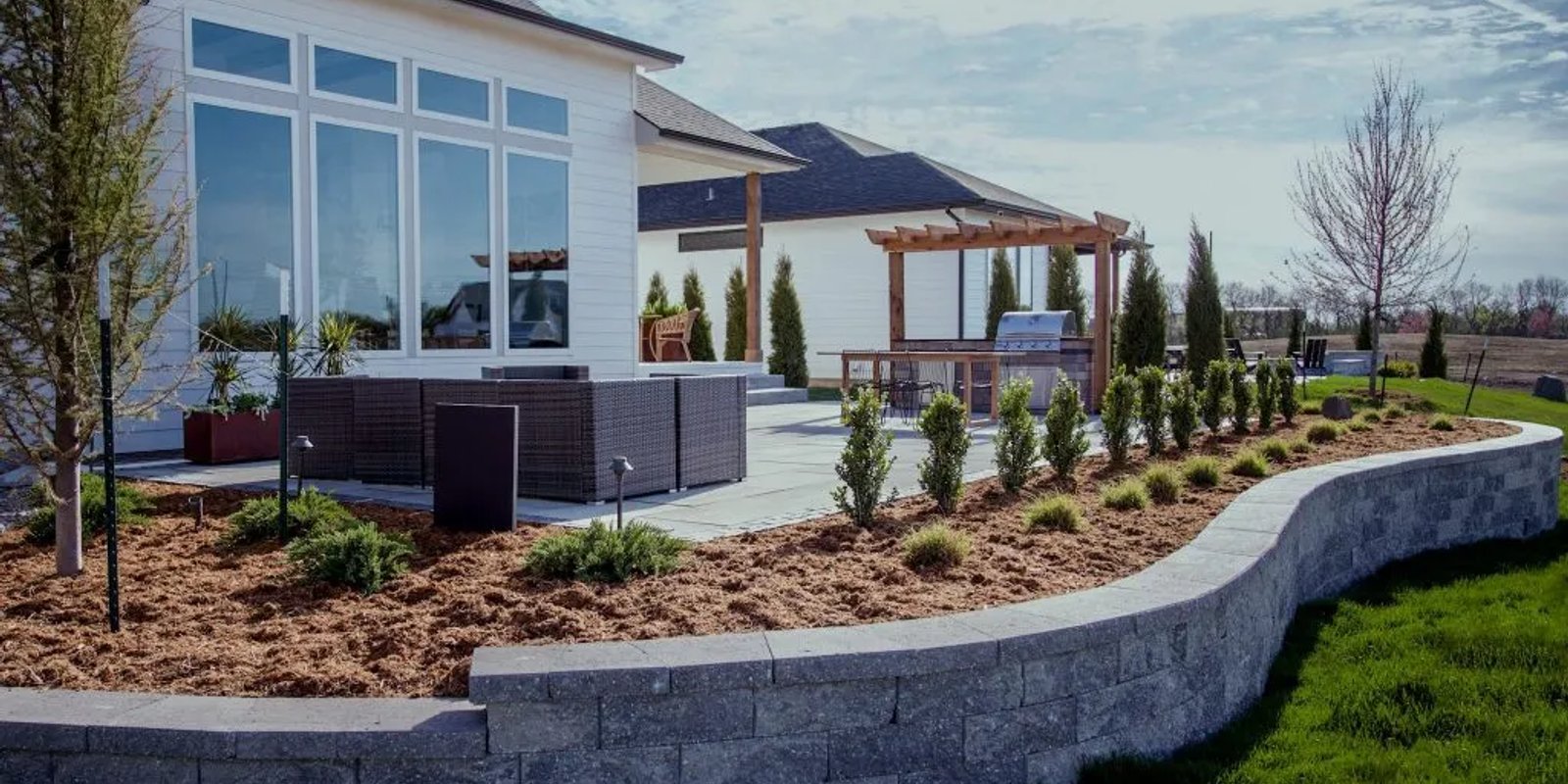
Concrete retaining blocks (Allan Block, Versa-Lok, Unilock) are the most common choice for Edmonton residential projects. Engineered for freeze-thaw performance, available in a wide range of styles, and buildable to significant height with proper geogrid reinforcement. The right choice for most residential work in this climate.
Natural stone (limestone, sandstone, granite) costs more and looks different, no two walls are identical. Performs well in Edmonton's climate when properly installed. Expect pricing at the higher end of the range, sometimes beyond it for premium stone with complex fitting.
Boulder walls suit natural or rural-style landscapes and larger properties. Large natural boulders placed with equipment rather than stacked block. Very durable, very low maintenance, priced accordingly.
Timber walls are the low-cost entry point with a significant Edmonton-specific trade-off: treated timber typically lasts 10–15 years before deteriorating, and freeze-thaw cycles accelerate that timeline. They work for small, low garden walls where budget is the primary driver. For anything structural or over 2 feet high, concrete block is the better long-term investment.
How Height Changes the Project
Height is the multiplier that changes everything about a retaining wall.
Under 3 feet: Straightforward construction. Minimal engineering, standard base preparation. No permits required for most Edmonton properties. Costs toward the lower end of the $45 – $85 range.
3-4 feet: More excavation, deeper base preparation, geogrid reinforcement layers start coming into play for concrete block. Drainage requirements increase. Mid-range pricing.
Over 4 feet: The rules change. Edmonton requires structural engineering and a permit for walls over 4 feet. Engineering typically adds $800 – $2,500 depending on wall length and complexity, plus City permit fees. The wall itself requires more substantial construction, deeper footings, more geogrid layers, more extensive drainage. Budget 4–8 weeks for the engineering and permit process before work starts.
One thing worth knowing: the 4-foot measurement is from the base of the wall to the top, not from grade. Walls on sloped sites sometimes look shorter than they are. Confirm the actual measurement before assuming no permit is required.
What Should Be in Every Retaining Wall Quote
A proper retaining wall installation includes more than stacking block. Every legitimate quote should cover:
Excavation. Digging out the base area and preparing the footing course. Depth depends on wall height and Edmonton's frost depth, the base needs to sit below frost line for structural walls.
Base preparation. Compacted granular base material. This is the foundation. Shortcuts here create long-term failures, not in year one, but in years three and five when the wall starts moving.
Drainage. Weeping tile and drain rock behind the wall. Non-negotiable in Edmonton. Water pressure that builds behind a wall without drainage is the primary reason retaining walls fail in this climate. Any quote that does not include drainage is a quote for a wall that will fail.
Geogrid reinforcement. For walls over 3 feet, layers of geogrid woven into the backfill add structural strength. Required for taller walls and specified by block manufacturers.
Backfill and compaction. Bringing the area behind the wall back to finished grade.
Two quotes that look similar can specify very different base depths. That is the most common hidden variable when homeowners compare numbers.
What Pushes Costs Higher
Site access. Equipment needs to reach the work area. In older Sherwood Park neighbourhoods like Heritage Hills and Lakeland Ridge, or tight new-build lots in Secord and Rosenthal, restricted access means more manual labor throughout the project. Measure your gate width before getting quotes.
Existing structures. Walls adjacent to driveways, foundations, or existing patios require more careful work and sometimes temporary shoring. That adds time and cost.
Soil conditions. Rocky soil or significant clay deposits requiring removal and replacement add excavation cost.
Add-ons. Steps integrated into the wall: $800 – $2,500. Lighting along the cap: $500 – $2,000. Multiple-tier walls are essentially multiple separate wall projects, each tier has its own base, drainage, and construction requirements.
Engineering and permits for walls over 4 feet. Add $800 – $2,500 for a structural engineer plus City of Edmonton permit fees. Unpermitted walls over 4 feet create liability and can become a resale issue when a home inspector flags them.
Retaining Walls and Grading: The Connection Most Miss
Retaining walls and lot grading interact directly. A wall built in the wrong location or to the wrong height can affect drainage patterns in ways that create problems elsewhere on the property, or on adjacent lots.
This matters most on new build lots in Edmonton's developing neighbourhoods, where final grade approval under Drainage Bylaw 18093 is still required. Any retaining wall that alters drainage direction needs to be coordinated with the grading plan. On established properties, the same principle applies: drainage has to go somewhere, and a wall that blocks the natural flow path creates a problem downstream.
Contractors who do both grading and retaining wall work coordinate this naturally. Contractors who only do walls sometimes miss it entirely.
3-Year Workmanship Warranty
All Serene Landscaping retaining walls come with a 3-year workmanship warranty covering base preparation, wall settling caused by the installation, and structural performance. No deposit required to start.
In Edmonton's freeze-thaw climate, a wall built correctly does not move. A warranty that covers the base, not just the face, tells you whether a contractor actually believes in how they built it.
Retaining Wall FAQs - Edmonton
What does the engineering and permit process actually look like for a wall over 4 feet, and how does it affect timeline?
For walls over 4 feet, a structural engineer reviews the design and produces stamped drawings before the City issues a permit. The process: contractor provides site information, engineer produces drawings, permit submitted to City, City reviews before work starts. In practice, this adds 3–6 weeks to the front end of the project and $800 – $2,500 in engineering fees plus permit costs. Unpermitted structural walls create liability and can surface as a problem at resale when a home inspector flags them.
How does Edmonton's freeze-thaw cycle specifically affect retaining wall design and what failure modes does it create?
Two main failure mechanisms: frost heave and hydrostatic pressure. Frost heave occurs when water in the soil behind or beneath the wall freezes and expands, pushing the wall forward or lifting the base course. Hydrostatic pressure builds when water cannot drain away, water is heavy, and a wall holding saturated soil is under significantly more load than the same wall holding dry soil. Both are preventable with proper base depth below frost line, weeping tile and drain rock drainage, and geogrid reinforcement at specified intervals. Walls that fail in Edmonton almost always have one or more of these elements missing or undersized.
What are the real differences between concrete retaining block brands like Allan Block and Versa-Lok, and does brand matter for performance in Edmonton?
Both are engineered block systems with similar performance characteristics when installed correctly. The meaningful differences are aesthetic, block profile, texture options, color availability, cap course appearance, rather than structural. Both require proper base preparation, drainage, and geogrid at manufacturer-specified intervals. A wall that fails with one brand would have failed with the other. The installation quality and drainage design matter far more than the specific block product.
What questions should a homeowner ask when comparing retaining wall quotes to make sure they're comparing equivalent work?
Ask each contractor: What is the base depth and material? (Should extend below frost line for structural walls.) Does the quote include weeping tile and drain rock? What geogrid intervals are specified for walls over 3 feet? What does the warranty cover, base and structure, or just the face materials? Who is responsible for engineering and permit costs if the wall measures over 4 feet? Two quotes that differ by $3,000 on the same wall length are almost always specifying different base depths or omitting drainage.
How should a homeowner coordinate a retaining wall project with grading, sod, or a patio?
Sequencing matters significantly. Retaining walls should go in after grading is complete and before sod, wall construction requires equipment access and will disturb finished grades. Patios adjacent to retaining walls need to be planned together because the wall footing and the patio base interact. On new build lots especially, doing final grading, retaining walls, sod installation, and a patio in a coordinated single project avoids multiple mobilizations and ensures the drainage design works as a whole rather than as pieces that may conflict.
What's the realistic lifespan of a properly installed concrete block retaining wall in Edmonton, and what maintenance does it need?
A concrete block retaining wall installed with proper base preparation, drainage, and geogrid should last 30–50 years. Annual maintenance is minimal: check for shifted blocks, confirm drainage outlets are not blocked, clear debris from behind the cap. Every few years confirm the wall is still plumb and the drainage system is functioning. Walls that start showing forward lean or pushing blocks are signaling a drainage problem behind the wall, addressing it early is far less expensive than waiting until the wall needs rebuilding.
If you are ready for a retaining wall quote, we are here to help.
Contact Serene Landscaping today for a free, on-site retaining wall quote!