




When Should You Start Spring Lawn Care in Edmonton?
Published: December 2025 | Author: Serene Landscaping | Reading time: 10 min
Start in mid-to-late April for cleanup and aeration, then move to mowing and fertilizing in May, with full spring programs commonly around $200 – $1,000 depending on scope.
This guide gives you the month-by-month sequence that actually works in Edmonton, plus where professional lawn care usually costs $200 – $1,000 depending on scope.
When Does Grass Start Growing in Edmonton?
Grass begins active growth when soil temperatures consistently reach 10°C (50°F). In Edmonton, this typically happens in mid-to-late April, though it varies by 2–3 weeks depending on spring weather patterns.
Signs your lawn is ready for spring care:
- Grass blades are visibly greening up
- Soil is no longer frozen and has dried out from snowmelt
- You can walk on the lawn without leaving deep footprints
- Daytime temperatures consistently above 10°C
- Frost is out of the ground
Don't start too early. Walking on or working a lawn when soil is still saturated from snowmelt causes soil compaction that damages grass roots all season long.
Spring Lawn Care Timeline for Edmonton Homeowners
Early April: Assess and Plan
Wait for snow to fully melt and standing water to drain before doing any yard work. Walking your property while soil is still wet causes compaction.
What to do in early April:
- Watch the weather and wait for ground to dry
- Order lawn care supplies (fertilizer, grass seed if needed)
- Research lawn care services if hiring professionals
- Make note of problem areas (bare spots, drainage issues, winter damage)
Mid-to-Late April: Spring Cleanup Begins
Once soil has dried enough to walk on without sinking, begin spring cleanup tasks.
Rake out dead grass and debris:
- Remove leaves and matted grass (thatch)
- Clear winter-killed plant material
- Rake gently to avoid tearing out healthy grass
Remove large debris:
- Pick up branches that fell over winter
- Clear any trash or items that blew into yard
- Remove protective winter coverings from plants
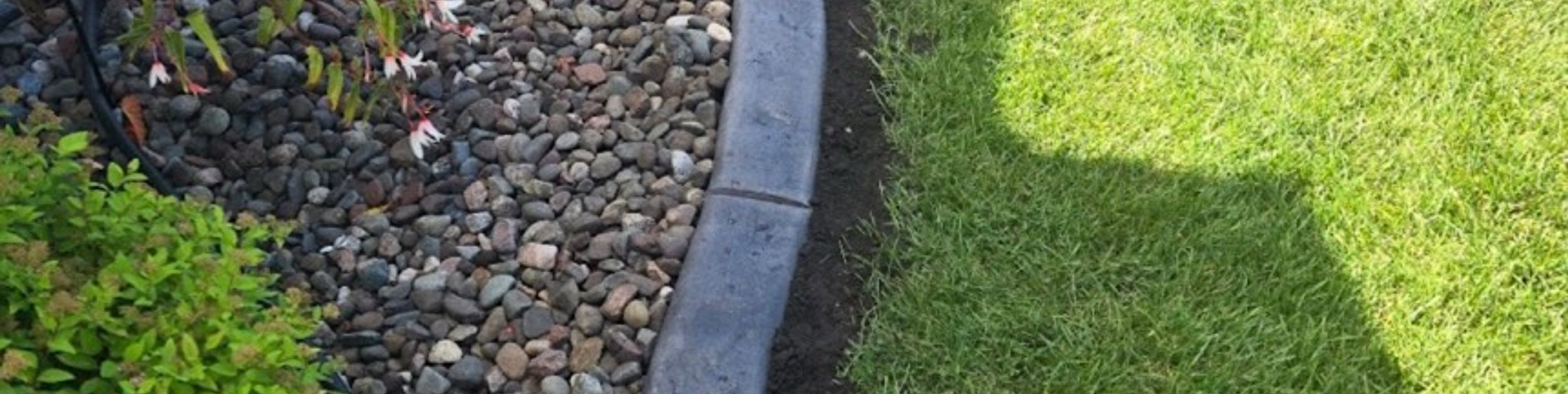
Edge walkways and driveways:
- Define clean lines between lawn and hardscaping
- Remove grass growing into pavement cracks
- Create crisp edges for professional appearance
This is the perfect time to book professional spring cleanup services if you'd rather not handle it yourself.
Late April to Early May: Core Aeration
Core aeration is one of the most important spring tasks for Edmonton lawns due to our heavy clay soil and freeze-thaw compaction.
Why aeration matters:
- Relieves soil compaction from heavy snow and ice
- Allows water, air, and nutrients to reach grass roots
- Promotes deeper root growth
- Improves drainage in clay soil
- Helps fertilizer reach root zone
Best aeration timing: Late April when soil is moist but not waterlogged
How aeration works:
A core aerator pulls small plugs of soil (2–3 inches deep) from your lawn, creating thousands of holes that allow air, water, and nutrients to penetrate compacted soil. Leave the soil plugs on the lawn - they'll break down and return nutrients to the soil.
DIY or professional aeration:
You can rent a core aerator from equipment rental shops for $60 – $100 per day, but they're heavy and difficult to maneuver. Professional aeration costs $150 – $400 depending on lawn size and is often included in spring cleanup packages.
Early May: Overseeding (If Needed)
If your lawn has thin areas or bare spots from winter damage, overseed right after aeration while soil is exposed.
Best grass seed for Edmonton:
- Kentucky bluegrass blends (sunny areas)
- Fine fescue mixes (shaded areas)
- Quality seed that survives Edmonton winters
Overseeding steps:
- Choose appropriate seed for sun/shade conditions
- Spread seed evenly over thin or bare areas
- Lightly rake to ensure seed-to-soil contact
- Keep seeded areas moist with daily light watering for 2–3 weeks
Mid-May: First Mow of the Season
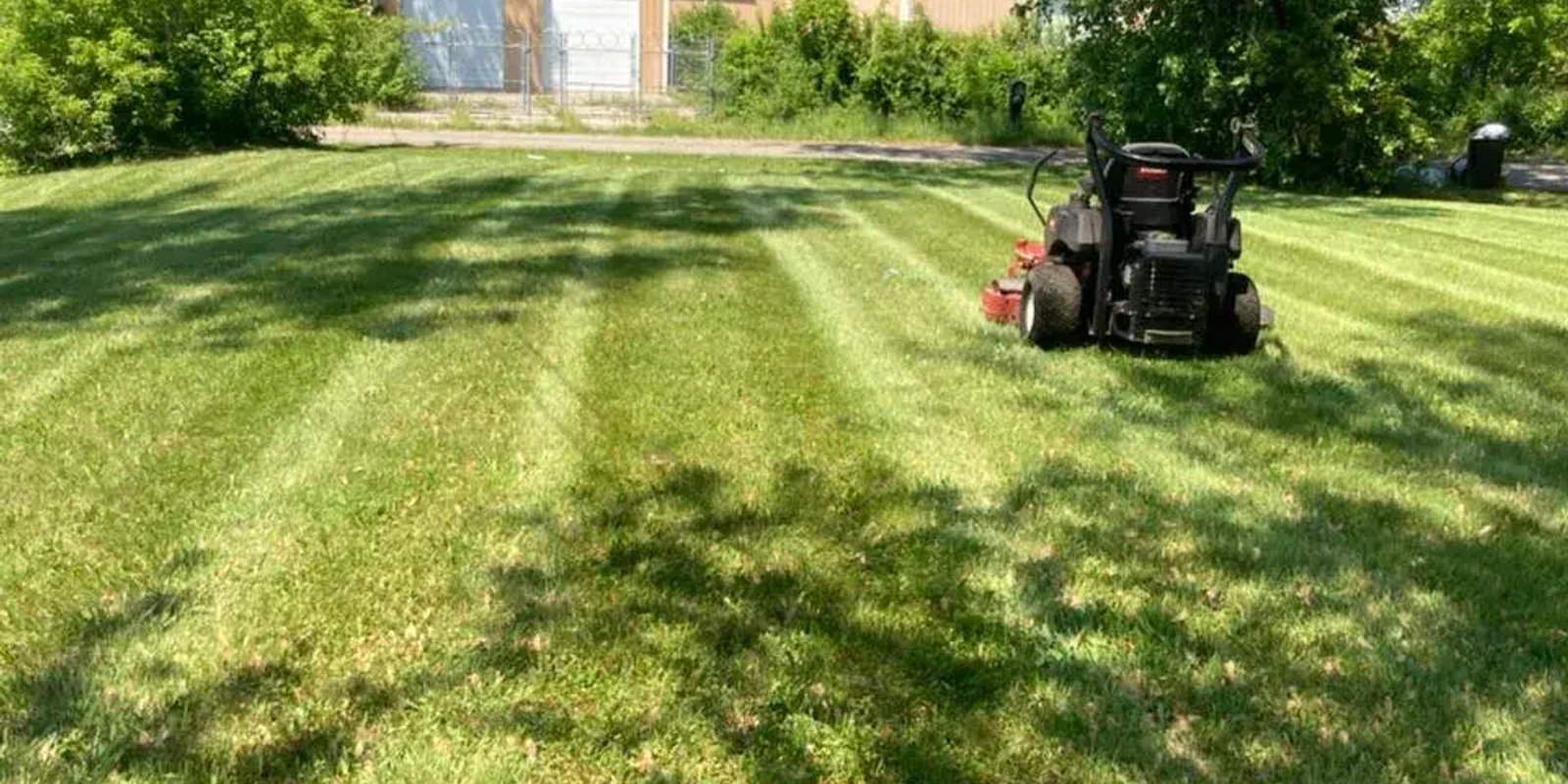
Your first mow should happen once grass reaches 3–4 inches in height, typically in mid-May for most Edmonton lawns.
First mow best practices:
- Set mower to 3 inches height (higher than summer mowing)
- Remove only 1/3 of grass blade length in first few mows
- Use sharp mower blades - dull blades tear grass and cause browning
- Mow when grass is dry to prevent clumping
Don't mow too early. If grass hasn't reached 3–4 inches yet, wait. Early mowing stresses grass before it has energy to recover from winter.
Late May: Fertilization
Apply spring fertilizer once grass is actively growing and you've mowed at least once, typically late May to early June.
Fertilizer application tips:
- Use slow-release nitrogen fertilizer
- Apply when grass is dry, then water thoroughly
- Follow package directions - over-fertilizing burns grass
- Wait to apply weed and feed products until early June
Why wait to fertilize?
Fertilizing too early (before grass is actively growing) wastes fertilizer as nutrients wash away before grass can use them. It can also promote weed growth instead of grass growth.
Should You Dethatch Your Edmonton Lawn in Spring?
Most Edmonton lawns don't need annual dethatching. Only dethatch if thatch layer exceeds ½ inch thickness.
How to check thatch thickness:
Dig a small wedge of lawn and measure the brown spongy layer between grass blades and soil. If it's over ½ inch, consider dethatching.
When to dethatch: Late May to early June, after grass is actively growing
Better alternative: Core aeration handles most thatch issues without the aggressive damage of dethatching. Aeration is recommended over dethatching for 90% of Edmonton lawns.
Common Spring Lawn Problems in Edmonton
Standing Water and Drainage Issues
Heavy spring runoff combined with Edmonton's clay soil creates drainage problems on many properties.
Causes:
- Compacted soil preventing water absorption
- Poor grading around foundation
- Low spots collecting water
Solutions:
- Core aeration improves short-term drainage
- Professional regrading and drainage solutions fix problems permanently
- Address before wet spring weather ends
Bare Spots and Winter Damage
Winter can create bare patches from:
- Heavy snow cover suffocating grass
- Salt damage near walkways and driveways
- Disease (snow mold)
- Rodent activity under snow
Solutions:
- Rake out dead material
- Add topsoil if area is sunken
- Overseed in early May
- Keep area moist for 2–3 weeks while seed germinates
Snow Mold (Pink or Gray Patches)
Snow mold is a fungus that develops under snow cover during winter, appearing as circular patches of matted, dead grass when snow melts.
Solutions:
- Rake affected areas vigorously to promote air circulation
- Grass usually recovers on its own once weather warms
- Severe cases may need reseeding
Prevention:
- Mow grass shorter in final fall mow
- Don't fertilize late in fall (after September)
- Remove leaves before snowfall
Weeds Emerging Early
Many weeds germinate earlier than grass in spring, giving them a competitive advantage.
Common spring weeds:
- Dandelions
- Creeping charlie
- Clover
Solutions:
- Hand-pull when possible (easiest when soil is moist)
- Spot-treat with herbicide in late May
- Focus on lawn health - thick, healthy grass crowds out weeds
Prevention:
- Thick, healthy grass prevents weed establishment
- Proper mowing height (3 inches)
- Adequate fertilization
- Aeration to relieve compaction
DIY vs. Professional Spring Lawn Care
DIY Makes Sense If:
- You have time and enjoy yard work
- You own or can rent equipment (aerator, spreader)
- Your lawn is relatively small (under 5,000 sq ft)
- You're comfortable with timing and product selection
- You have physical ability for demanding tasks
Professional Service Makes Sense If:
- You lack time or equipment
- Your lawn has ongoing problems (drainage, thin spots, weeds)
- You want it done right without trial and error
- You'd rather enjoy your yard than maintain it
- Large property (over 8,000 sq ft)
Our spring cleanup and lawn care programs include raking, aeration, overseeding, fertilization, and the first mow - everything your lawn needs to start the season strong.
Spring Lawn Care Checklist for Edmonton Homeowners
Early April:
- [ ] Wait for soil to dry out from snowmelt
- [ ] Remove large debris (branches, trash)
- [ ] Assess lawn for winter damage and problem areas
- [ ] Order supplies or book professional services
Mid-to-Late April:
- [ ] Complete spring cleanup (rake debris, edge walkways)
- [ ] Core aeration (late April to early May)
- [ ] Overseed thin or bare areas if needed
- [ ] First mow when grass reaches 3–4 inches
May:
- [ ] Continue regular mowing schedule (weekly as needed)
- [ ] Apply slow-release fertilizer (late May)
- [ ] Address drainage issues before summer
- [ ] Spot-treat weeds as needed
Early June:
- [ ] Resume regular weekly/bi-weekly mowing schedule
- [ ] Water deeply when needed (1 inch per week including rain)
- [ ] Adjust mower height to 3 inches for summer
- [ ] Monitor for pests or disease
Spring Lawn Care FAQs - Edmonton
Q: When should I start mowing my lawn in Edmonton?
A: Wait until grass reaches 3–4 inches in height, typically mid-to-late May. Mowing too early stresses grass before it has energy to recover from winter.
Q: Do I need to aerate my lawn every spring?
A: Most Edmonton lawns benefit from annual spring aeration due to clay soil and freeze-thaw compaction. Fall aeration also works, but spring is ideal for combining with overseeding.
Q: Can I walk on my lawn right after snow melts?
A: No - walking on saturated soil causes compaction. Wait until soil has dried enough that you don't leave deep footprints when walking.
Q: Should I bag or mulch grass clippings in spring?
A: Mulch clippings (leave them on the lawn) unless grass is excessively long. Clippings return nutrients to soil and don't contribute to thatch buildup.
Q: When should I apply weed control in Edmonton?
A: Late May to early June, after grass is actively growing and weeds have emerged. Pre-emergent weed control isn't effective in Edmonton's climate due to freeze-thaw cycles.
Q: My lawn has bare spots after winter. What should I do?
A: Rake out dead material, add topsoil if the area is sunken, then overseed in early May. Keep the area consistently moist for 2–3 weeks while seed germinates.
Q: How much does professional spring lawn care cost in Edmonton?
A: Spring cleanup typically costs $200 – $600 depending on property size. Full spring service including cleanup, aeration, overseeding, and first mow costs $400 – $1,000 for average residential properties.
Q: Is spring or fall better for lawn aeration in Edmonton?
A: Both work well. Spring aeration is ideal for overseeding thin areas. Fall aeration pairs well with fall fertilization. Choose based on your lawn's specific needs.
If you are ready to book spring lawn care, we are here to help.
Contact Serene Landscaping today for a free quote on spring cleanup and lawn care!