




Published: April 2026 | Author: Serene Landscaping | Reading time: 10 min
The Edmonton spring thaw is a welcome relief after a long winter, but as the snow disappears, it often reveals a stressful reality for local homeowners: a yard that drains directly into their foundation. Whether you are staring at a muddy, ungraded lot on a brand-new build or dealing with massive puddles forming against an older home, the spring melt puts your property's drainage to the ultimate test.
At Serene Landscaping, our crews have spent over 8 years fixing these exact problems across Edmonton, St. Albert, and Sherwood Park. We know firsthand that water pooling near your house is not just a landscaping annoyance - it is a structural threat caused by Edmonton's heavy clay soils that can quickly lead to basement leaks and foundation damage. If you just bought a new build, improper final grading is often exactly why you cannot landscape your yard yet and why your builder is still holding your deposit.
You do not need a temporary fix. You need precision grading that protects your home and passes City of Edmonton inspections on the first try. Below, our landscape construction team breaks down exactly how the spring melt threatens your property, how to spot warning signs of negative slope, and why securing professional final grading early in the season is the key to getting your yard ready for summer.
Understanding the Edmonton Spring Melt and Yard Drainage
To understand why your yard becomes a soggy, waterlogged mess every April and May, you have to look at the unique soil composition of the Edmonton area. Most neighborhoods in Edmonton, Sherwood Park, and St. Albert are built on heavy clay soil. While clay is stable for foundations, it is notoriously poor at absorbing water.
During winter, clay soil freezes solid and acts like an impermeable layer. When spring melt begins, warmer air quickly melts snow on top of your lawn, but the ground beneath often remains frozen for weeks. Because water cannot soak into the frozen clay, it pools on the surface.
This is where your yard drainage either saves you or fails you. If your yard has the correct slope, gravity pulls surface water away from your home and toward storm systems or swales. If your yard is flat, or worse, slopes toward your house, water sits against foundation walls. Over time, hydrostatic pressure builds and forces moisture through tiny concrete cracks, leading to damp basements, mold growth, and flooding.
The Danger of Negative Slope After Winter
Many homeowners are confused when drainage issues suddenly appear, especially if prior years looked fine. The culprit is often negative slope, which Alberta's freeze-thaw cycle can create or worsen.
Negative slope occurs when the ground around your home's perimeter sits higher than it should, forcing water back toward the house. Even if your lot originally passed grading, winter movement can reverse the slope.
When moisture in soil freezes, it expands. This causes frost heave, which lifts soil upward. When thaw comes, soil rarely settles back into the exact same position. Over repeated winters, this shifting, combined with normal settling around foundations, can flip your drainage direction.
Raised beds near siding, poorly placed fill, or old landscaping changes can also create artificial high spots that trap meltwater against your basement walls.
Signs Your Yard Needs Immediate Regrading This Spring
As snow clears, walk your property and look for these warning signs:
- Water pooling near your foundation: Puddles against foundation walls, window wells, or under decks 24 hours after melt or rain indicate failed grading.
- Constant sump pump cycling: If your pump runs nonstop during spring thaw, too much surface water is infiltrating soil beside your house.
- Spongy, swampy grass: If footsteps sink and fill with water, your lawn is oversaturated and failing to drain.
- Muddy foundation walls or efflorescence: Mud lines or white chalky mineral deposits on exposed concrete signal repeated water contact.
- Dead grass, moss, or algae: Persistent wet zones kill turf and invite moss growth.
Seeing Standing Water Near Your Foundation?
Get a free on-site assessment and a final grading plan that redirects water away from your home before summer storms hit.
How to Fix It: Why Professional Final Grading Matters
Many homeowners try a quick fix by dumping bagged topsoil near the house. This usually shifts the water problem instead of solving it.
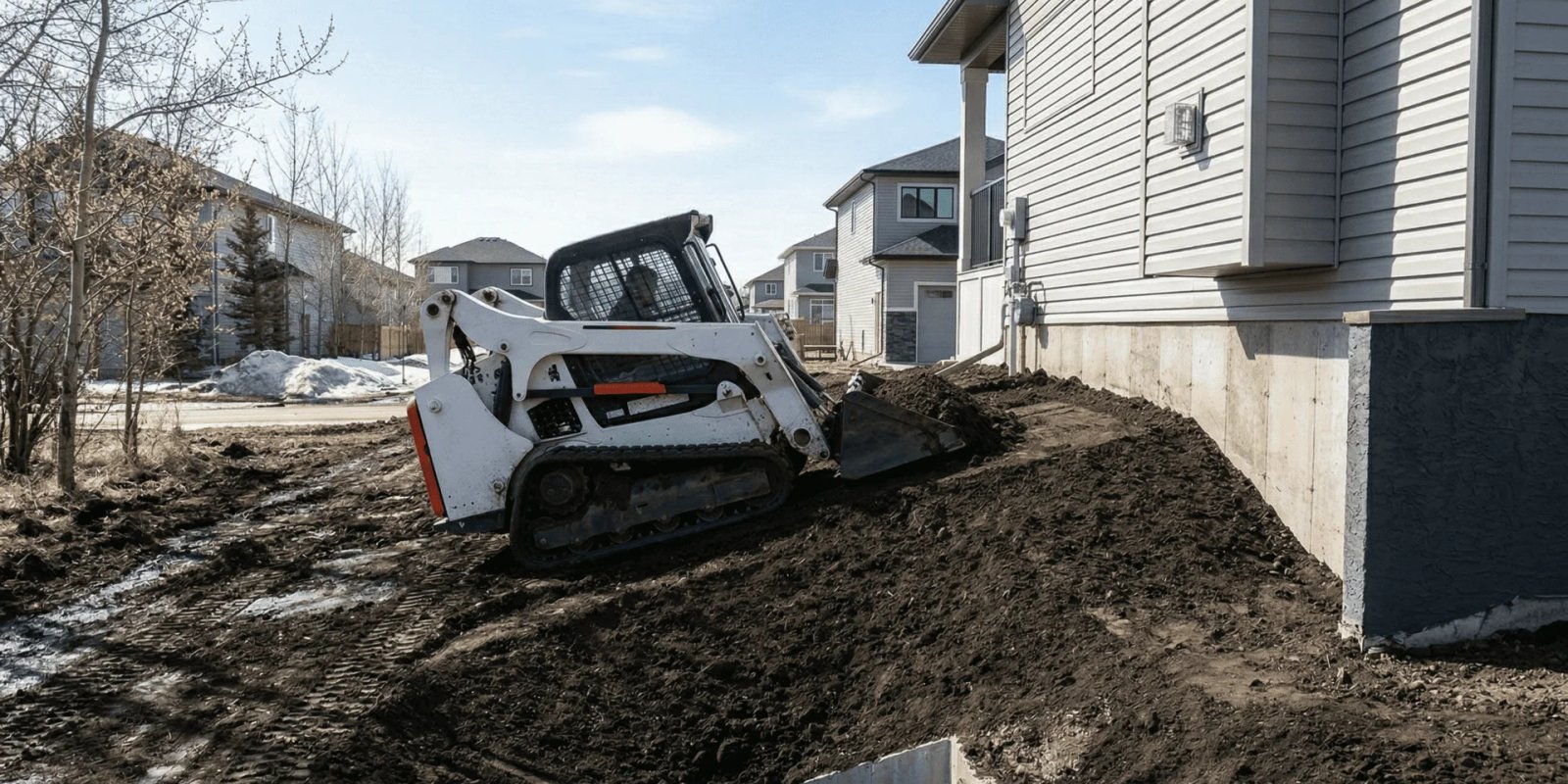
To protect your home properly, you need full elevation correction through professional final grading.
Professional regrading in Edmonton is precision work, not guesswork. It relies on transit or laser levels and must align with City of Edmonton Drainage Bylaw 18093.
What professional spring regrading includes
Elevation review and utility locates
The crew reviews lot grades, marks utilities, and measures current slope to plan proper corrections.Stripping damaged surface
Dead turf and waterlogged topsoil are removed to expose stable clay subgrade.Re-establishing clay base (rough grade)
The clay base is sculpted to direct water away from the foundation.Applying required drainage slope
The final grade must support proper runoff and municipal standards, including a reliable fall away from the home and continuous drainage to approved paths.Compaction and topsoil application
Topsoil is spread and compacted correctly to reduce future settling and preserve slope performance.
Why You Must Act Before Summer Storms
Spring melt reveals drainage issues, but summer storms magnify them. Edmonton can see intense June and July downpours that dump huge volumes of roof runoff into downspouts in minutes. If that discharge enters a negatively sloped yard, water races back to your foundation.
By regrading in spring, you prepare your lot before storm season and reduce year-round risk.
Restoring the Yard After Grading: Spring Sod Installation
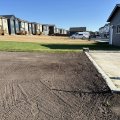
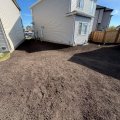
After grading, your drainage is corrected, but the lot is often bare topsoil. Leaving it exposed is risky. Rain and wind can erode soil and compromise the slope you just paid for. Bare soil also invites weeds.
The next step is sod. Spring is an excellent time for new sod in Edmonton because cooler temperatures and regular moisture help roots establish faster than mid-summer heat.
When installed in May or early June, Kentucky bluegrass roots can establish quickly in freshly graded soil. The turf then helps stabilize the surface and protect your new elevations from erosion.
A professional installation crew can often complete a residential lot in one day. The result is immediate: your property shifts from muddy hazard to functional, healthy lawn.
DIY vs Professional Spring Drainage Repair
DIY grading videos make the process look easy, but spring regrading is technical and high-risk for homeowners.
- Heavy equipment in wet clay is difficult to operate safely.
- Small slope errors create low spots where water permanently pools.
- New-build lots still require compliant grading and often surveyor documentation before deposit release.
If grading fails inspection or performs poorly, you pay twice - once for the first attempt, and again for corrections.
Professional crews remove the guesswork and complete the work to spec the first time.
Protect Your Home This Spring
Your foundation is only as safe as the grade around it. Do not let spring melt turn your yard into a swamp or your basement into a repair project.
If you see pooling water, soggy turf, or signs of negative slope, fix it before summer storms arrive. Precision grading plus fresh sod protects structural integrity, improves curb appeal, and gives long-term peace of mind.
At Serene Landscaping, we handle the full process - grading, topsoil leveling, and coordination support - with no upfront deposit required.
Ready to fix your drainage and reclaim your yard this spring? Contact Serene Landscaping to book your free on-site consultation.
Get a Firm Price for Your Yard
Tell us what you're planning. We'll come out, look at the site and give you a free quote. Serving Edmonton, St. Albert, Sherwood Park and Spruce Grove.