






Published: July 2026 | Author: Serene Landscaping | Reading time: 9 min
Every winter, thousands of Edmonton homeowners find out about the City's sidewalk rules the hard way: a warning notice, a bylaw complaint from a neighbour, or a $100 ticket plus an invoice for a City-hired contractor. The rules themselves are not complicated, but most of what people believe about them is secondhand, and some of it is wrong.
This guide explains what Edmonton's snow removal bylaw actually requires, how the 48-hour rule really works, what enforcement looks like, who is responsible in the less obvious situations like corner lots, rental properties, and windrows, and what help is available if you physically cannot clear your own walks.
At Serene Landscaping, we build our residential snow removal service around these rules, because for a lot of our clients, staying compliant without having to think about it is half the reason they hire us.
What Edmonton's Bylaw Actually Says
The requirement comes from Edmonton's Community Standards Bylaw 14600. The wording is short: a person must keep any sidewalk adjacent to the land they own or occupy clear of all snow and ice.
Three details in that sentence matter more than most people realize.
First, "adjacent" means the public sidewalk bordering your property, not just the private walkway to your door. If a City sidewalk runs along your lot, clearing it is your job, not the City's.
Second, "own or occupy" means renters can share the responsibility with landlords. If you rent a house, check your lease, because occupants are covered by the bylaw's wording too.
Third, "snow and ice" means down to a walkable surface. Shoveling the fluffy top layer and leaving hard-packed ice underneath does not meet the standard. That is why ice control matters as much as shoveling, especially during freeze-thaw cycles.
How the 48-Hour Rule Really Works
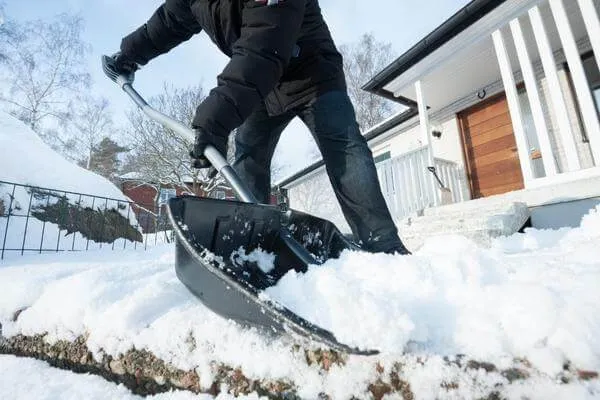
The bylaw expects snow and ice removed as quickly as possible, with complaints accepted after 48 snow-free hours
Here is the nuance most articles miss: the bylaw itself does not contain a 48-hour deadline. It expects snow and ice to be removed as quickly as possible. The 48-hour window is an enforcement threshold: the City accepts complaints between November 1 and May 1, once it has not snowed for at least 48 hours.
In practice, that means the clock starts when the snowfall ends. After a multi-day storm, you get 48 snow-free hours before a neighbour's complaint can trigger enforcement. But waiting the full 48 hours every time is a gamble, because packed-down snow turns to ice fast, and ice is much harder to remove than fresh snow. The City's own guidance on residential sidewalk snow and ice is clear that the expectation is prompt clearing, not clearing at hour 47.
Don't Risk a Bylaw Fine This Winter
Let us handle sidewalk clearing on your schedule — get a free quote and stay compliant without tracking the forecast.
What Happens If You Don't Clear
Enforcement is complaint-driven. When a complaint comes in, a bylaw officer inspects the sidewalk. What follows is usually a sequence, not an instant ticket: a warning with a chance to fix it, then a $100 fine if the sidewalk still is not cleared.
The fine is not the expensive part. If the City sends its own contractor to clear your sidewalk, you are invoiced for that work on top of the ticket, based on the contractor's rate and the amount of snow. Together, one missed sidewalk can cost more than a month of professional snow removal. Current residential rates are on our snow removal page, and we break down how quotes work in our Edmonton snow removal cost guide.
Vacant properties are not exempt. If you own an empty lot or an unoccupied house, every walk and driveway crossing on or beside it is still your responsibility.
Who Is Responsible in the Tricky Cases
The straightforward case is a mid-block house with one sidewalk out front. The bylaw gets more interesting at the edges:
- Corner lots. You are responsible for every sidewalk adjacent to your property, which on a corner means both frontages. That can double the shoveling and is worth factoring in when you compare snow removal quotes.
- Rental properties. The bylaw applies to owners and occupiers. Landlords and tenants should agree in writing on who clears the walks, because the City can pursue either.
- Windrows. When City graders clear neighbourhood roads, they leave a windrow of packed snow along the edge, including across your driveway. Clearing the windrow at your own driveway is the homeowner's responsibility. The City explains its road clearing cycle on the neighbourhood roads in winter page. Windrow clearing at the driveway entrance is included in our regular residential visits.
- Businesses. Commercial properties carry the same sidewalk obligation, plus the practical liability of customers and employees on their parking lots and entrances. For property managers, this is usually handled through a seasonal contract; see our commercial snow removal in Edmonton page for how that works.
Help for Seniors and People With Disabilities
If you physically cannot clear your own sidewalks, the City of Edmonton offers an Assisted Snow Removal Program that helps cover costs for eligible seniors and people with disabilities. Community volunteers also pitch in across many neighbourhoods each winter.
We regularly work with clients who qualify for assistance programs, and we are happy to coordinate service around them. If mobility is the reason your walks are not getting cleared, there are better options than risking a ticket.
How to Stay Compliant Without Tracking Any of This
You can absolutely stay compliant with a shovel, a bag of ice melt, and discipline. The honest challenge is consistency: the bylaw does not care whether you were out of town, sick, or at work during the storm, and neither does the ice that forms while you are away.
A seasonal snow removal contract removes the tracking entirely. Our service is built so the bylaw never becomes your problem:
- Automatic dispatch for every snowfall over 1 cm, no call required.
- Driveway, front walkway, entrance, and adjacent sidewalks cleared within 24 hours of snowfall, half the complaint window.
- Ice control with salt or calcium chloride on every visit, so the "and ice" part of the bylaw is covered too.
- Unlimited visits per month, so back-to-back storms do not leave you exposed.
- Photo proof of every visit, useful if a complaint is ever filed in error.
Whether that trade is worth it depends on your situation, and we compare both approaches honestly in seasonal contract vs per-visit snow removal.
Why Serene Landscaping Builds Around the Bylaw
Serene Landscaping has served Edmonton properties for more than 8 years, through summers of grading, sod, and landscape construction and winters of snow. We are fully licensed, insured, and WCB covered, and our winter routes across Edmonton, St. Albert, and Sherwood Park are scheduled so contract clients are cleared before one-off requests.
Our 24-hour clearing guarantee exists specifically because of the 48-hour complaint window: when your walks are done in half the time the City allows, compliance stops being something you think about. And because the same company handles your lawn maintenance in summer, there is no seasonal handoff where responsibility gets lost between contractors.
Conclusion: Know the Rules, Then Make Them Someone Else's Job
Edmonton's snow removal bylaw is simple at its core: keep the sidewalks beside your property clear of snow and ice, promptly, from November through May. The enforcement details, the 48-hour complaint threshold, the $100 fine, the contractor invoice, and the corner lot and windrow rules, are just the consequences of not doing it.
If you want those rules handled automatically all winter, contact Serene Landscaping for a free quote. And if you are getting your property ready before the season, start with our checklist on how to prepare for snow removal in Edmonton.