




Published: August 2025 | Author: Serene Landscaping | Reading time: 8 min
No. For final grading and landscaping in St. Albert, the City generally requires rough grade approval only. Most projects still cost about $1,500 – $3,500 for grading or $3,000 – $8,000 with sod.
The difference matters, and understanding it will save you confusion, unnecessary calls to the City, and potentially money.
Most grading projects on St. Albert residential lots run $1,500 – $3,500. Combined grading and sod for a new build typically lands between $3,000 – $8,000.
If you are also comparing Edmonton rules, read Final Grading Edmonton.
The Key Difference: St. Albert Does Not Require Final Grade Approval
In Edmonton, final grade approval is mandatory. A licensed surveyor measures your finished grades, submits an as-built report to the City under Drainage Bylaw 18093, and the City reviews and approves it before your occupancy permit proceeds. Two stages: rough grade, then final grade, with the builder landscaping deposit released only once that final grade passes.
St. Albert stops at one stage.
According to the City of St. Albert's own lot grading FAQ: "The City of St. Albert does not require final lot grade certificates or conduct final grade inspections."
What St. Albert requires is rough grade approval only. Once your home is substantially complete, your builder commissions a licensed surveyor to prepare a Lot Grading Certificate. That goes to the City. The City reviews it, conducts a site inspection, and if grades meet standards, rough grade is approved. After that, maintenance responsibility shifts to you as the homeowner.
Enforcement of ongoing drainage standards happens under St. Albert's Surface Drainage Bylaw 14/2015, on a complaints-made basis, not through scheduled inspections.
What This Means Practically
No final grade certificate does not mean no drainage standards. Three things still apply:
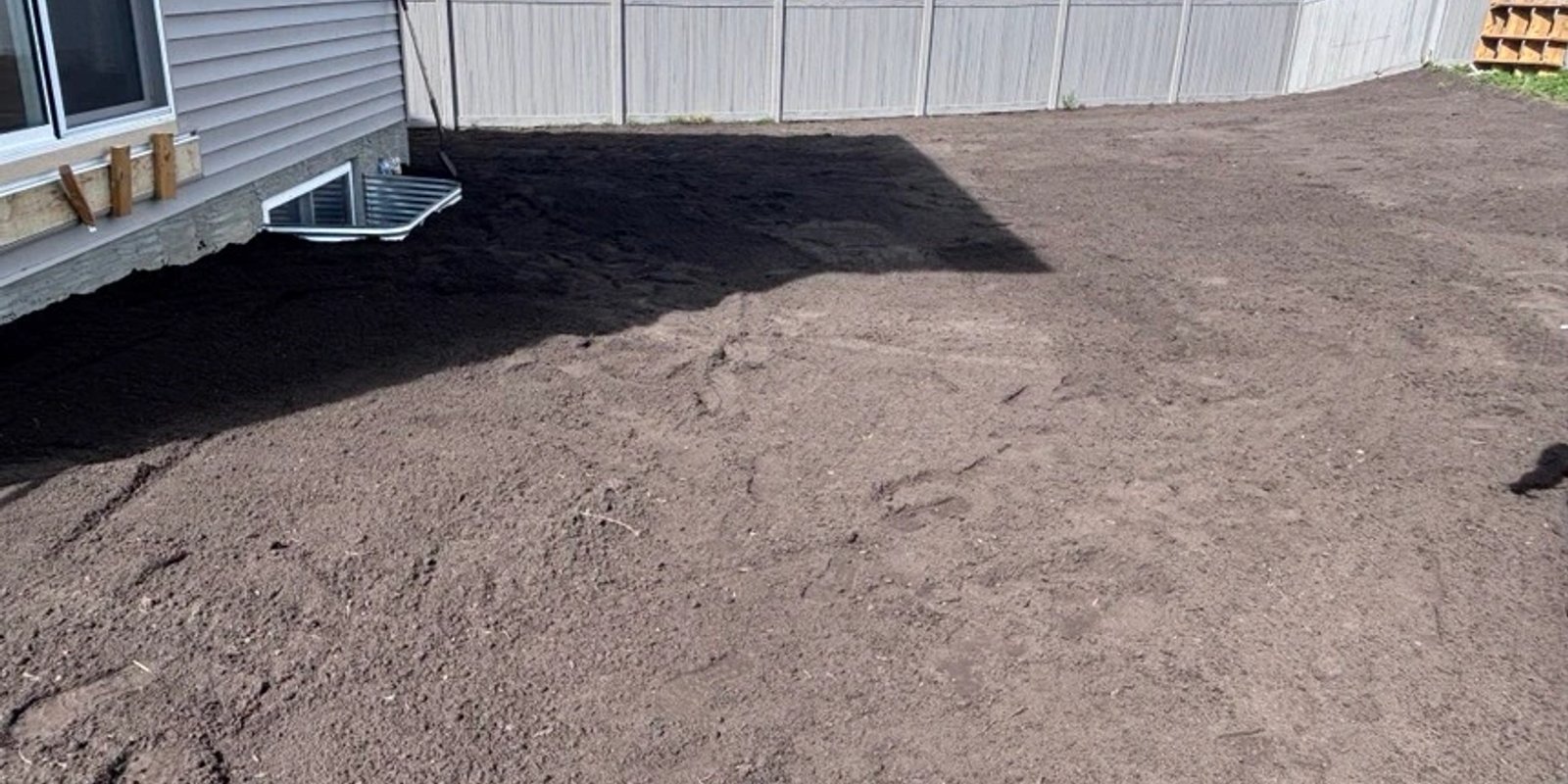
Topsoil requirement. St. Albert requires a maximum of 6 inches of topsoil applied uniformly across the entire lot. This ceiling exists to protect the drainage patterns established at rough grade. Uneven topsoil application changes lot elevations and can redirect drainage toward your foundation or onto neighboring properties.
You own maintenance from rough grade approval forward. Backfill settles for years after construction. The City is explicit: repairing settlement is regular home maintenance. Keeping positive drainage away from your foundation as the lot shifts is your responsibility.
Drainage swales are shared infrastructure. Most St. Albert lots share a grass swale between adjacent properties that moves water toward storm collection. Blocking or altering that swale, even with decorative landscaping, can violate the Surface Drainage Bylaw and create neighbor disputes. Any landscaping work near a swale needs to maintain the original drainage direction.
Need Final Grading in St. Albert?
Get a free on-site quote for grading that meets your builder's requirements, even without a mandatory city approval.
What the Physical Work Includes
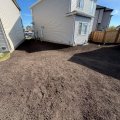
Even without a final grade certificate requirement, the grading work itself is essentially the same as Edmonton.
For a new build in Erin Ridge North, Jensen Lakes, or Riverside:
- Grading to proper slope (minimum 2% away from foundation)
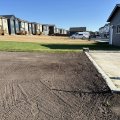
- Quality topsoil spread uniformly, working within the 6-inch maximum while maintaining approved drainage patterns
- Positive drainage established to the street or approved swale
- Surface prepared for sod installation or Artificial Turf
For established yards in Braeside or Oakmont where drainage has developed problems over time: targeted grading corrections, filling settled low spots near the foundation, regrading problem areas, correcting negative drainage without altering the lot's original design.
How Much Does Grading Cost in St. Albert?
- Grading only (most residential lots): $1,500 – $3,500
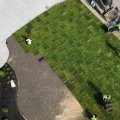
- Grading + sod (new build completion): $3,000 – $8,000
- Extra topsoil if the site is short: $200 – $800
- Drainage corrections: $500 – $2,000
What pushes costs higher in St. Albert specifically: tight access in denser newer subdivisions, established trees and mature landscaping in older neighbourhoods that require careful work around root systems, and lots with significant elevation changes.
For new builds, combining grading and sod in one visit saves mobilization cost and ensures topsoil application and grading are done to a consistent standard throughout.
At Serene Landscaping, no deposit is required to start. Free on-site consultation, written quote within 24 hours.
St. Albert vs. Edmonton: Quick Reference
| Edmonton | St. Albert | |
|---|---|---|
| Rough grade approval required | Yes | Yes |
| Final grade certificate required | Yes | No |
| Final grade inspection by City | Yes | No |
| Governing bylaw | Drainage Bylaw 18093 | Surface Drainage Bylaw 14/2015 |
| Topsoil requirement | Min. 4 inches | Max. 6 inches (uniform) |
| Ongoing maintenance | Homeowner after final approval | Homeowner after rough grade approval |
| Enforcement model | Required approval process | Complaints-made basis |
Final Grading FAQs - St. Albert
What exactly does rough grade approval involve in St. Albert, and how does it differ from Edmonton's process?
In St. Albert, rough grade approval is the City's only grading checkpoint for new construction. Your builder hires a licensed surveyor to prepare a Lot Grading Certificate, which goes to the City. A City representative reviews it and conducts a site inspection, approval is issued if grades meet standards. Edmonton adds a second stage: a final grade certificate after topsoil and landscaping, requiring another survey and City review. St. Albert skips that second stage entirely.
Since St. Albert doesn't do final grade inspections, how does the City actually enforce drainage standards?
Enforcement under Surface Drainage Bylaw 14/2015 is complaints-made. The City is not actively inspecting properties. If a neighbor or homeowner files a drainage complaint, the City investigates. If a violation is found, the property owner pays remediation costs. The drainage standard still applies; the mechanism is reactive rather than proactive.
What does the 6-inch topsoil maximum actually mean for landscaping work in St. Albert?
It is about preserving approved drainage patterns. Piling topsoil unevenly, heavily in some areas and thin in others, alters lot elevations and can redirect drainage toward the foundation or onto neighboring lots. The requirement is uniform application across the entire lot. This shapes how grading contractors approach topsoil work on St. Albert lots and is worth confirming with any contractor you hire.
How should a homeowner in an established St. Albert neighbourhood like Braeside or Oakmont approach grading corrections?
Start by understanding the lot's original drainage design, whether it is split drainage or back-to-front, and correcting areas where settlement or previous landscaping changes have created negative drainage. A contractor should grade corrections to match the original design, not just fill low spots. Raising one area without considering the downstream path creates new problems elsewhere.
What happens to drainage swales during landscaping work in St. Albert, and what are homeowners responsible for protecting?
Swales are shared infrastructure between adjacent properties. Homeowners are responsible for maintaining them, clearing debris, not placing borders or structures that block flow, and not regrading in ways that divert the swale. When landscaping happens near a swale, the contractor must confirm the swale's original grade and direction and restore it correctly. Altering a shared swale without understanding the drainage design is one of the most common sources of neighbor disputes in St. Albert.
For a new build homeowner in Jensen Lakes or Erin Ridge North, what's the right sequence for finishing the yard after rough grade approval?
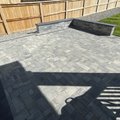
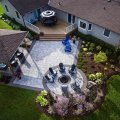
Rough grade approval is your trigger to start landscaping. The right sequence: grading to final landscape elevation (within St. Albert's topsoil requirements, maintaining approved drainage), then sod or artificial turf, then hardscaping like a patio or walkway. Doing hardscaping before grading is complete risks disturbing finished grades to install the base, coordinating everything in one project avoids that. For high-demand development areas like Jensen Lakes, book early in spring. The May-June window fills fast.
How does St. Albert's grading framework affect future yard changes after the initial build?
The Surface Drainage Bylaw applies to all future changes. Adding raised beds, installing a retaining wall, changing swale areas, or regrading any portion of the yard must maintain drainage direction consistent with the approved lot design. No permit is required for most grading maintenance or landscaping adjustments, but changes that alter drainage patterns, especially near property lines or shared swales, need careful handling. The City's position: if a drainage change creates a problem for a neighbor, everyone affected may need to make corrections.
Serene Landscaping handles final grading and full landscaping in St. Albert across Erin Ridge, Jensen Lakes, Riverside, Braeside, Oakmont, Lacombe Park, and surrounding areas. No deposit. Written quote within 24 hours.
Contact Serene Landscaping today for a free, on-site final grading quote in St. Albert!
Get a Firm Price for Your Yard
Tell us what you're planning. We'll come out, look at the site and give you a free quote. Serving Edmonton, St. Albert, Sherwood Park and Spruce Grove.