




Published: August 2026 | Author: Serene Landscaping | Reading time: 17 minutes
Standing water in an Edmonton yard is more than an inconvenience or a breeding ground for mosquitoes. It can leave the lawn muddy, damage sod and planting beds, contribute to frost heaving beneath patios and walkways, and direct excess moisture toward the home's foundation.
The difficult part is that standing water is a symptom, not a diagnosis.
One homeowner may have a low spot caused by soil settlement. Another may have a blocked property-line swale. A third may have roof runoff discharging beside the foundation. Installing the same drainage system on all three properties would waste money and could move the problem somewhere else.
The purpose of residential lot grading in Edmonton is to shape the property so stormwater moves away from buildings and toward an appropriate City right-of-way. The City regulates that drainage pattern through Drainage Bylaw 18093, and property owners remain responsible for maintaining their approved grades after construction is complete.
This guide explains how to identify the source of standing water, how common yard drainage solutions work, and when regrading, swale repair, catch basins, channel drains or French drains make sense.
What Is the Best Way to Fix Yard Drainage in Edmonton?
Most Edmonton yard drainage problems should be addressed in this order:
- Identify where the water is coming from.
- Confirm where the water is supposed to go.
- Clear blocked swales and drainage routes.
- Correct roof runoff and downspout discharge.
- Repair low spots and negative grades.
- Restore the intended surface drainage pattern.
- Add catch basins, channel drains or subsurface drains only where needed.
Proper grading is normally the first line of defence. French drains and other underground systems can be useful, but they do not replace a yard that slopes correctly away from the home. EPCOR advises homeowners to keep swales clear, direct downspouts toward appropriate drainage routes and avoid changing the designed shape of a swale. Federal flood-prevention guidance similarly identifies correct property grading as the first defence before additional drainage systems are installed.
Quick Yard Drainage Diagnosis
| What you notice | Likely cause | Possible solution |
|---|---|---|
| Water pooling beside the foundation | Settled soil, negative grade or downspout discharge | Foundation regrading, compacted soil correction or downspout extension |
| A long puddle along the property line | Blocked, flattened or altered swale | Restore the swale and remove obstructions |
| One wet area in the middle of the lawn | Local depression, compaction or inadequate outlet | Regrading, soil correction, catch basin or subsurface drainage |
| Water collecting beside a patio | Incorrect patio slope or poor transition into the lawn | Regrade the edge, reset paving or install a channel drain |
| Soggy soil that remains wet below the surface | Subsurface seepage or poorly draining soil | French drain, drain tile or soil reconstruction |
| Water appears mainly during spring melt | Frozen soil, snow placement, low spots or settled grade | Snow management, swale clearing and grade correction |
| Water enters from a neighbouring property | Altered elevations, blocked shared swale or redirected runoff | Document the flow, speak with the neighbour and assess both grades |
| New sod remains soft or yellow | Water trapped beneath sod or inadequate base preparation | Correct drainage before replacing or repairing the lawn |
| Water pools near a retaining wall | Missing wall drainage or a blocked drainage route | Wall drainage assessment, outlet correction or regrading |
The visible puddle is only the final collection point. A proper assessment should follow the water backward to its source and forward to its intended outlet.
Why Edmonton Yards Develop Drainage Problems
Edmonton properties face several drainage conditions at the same time. The city has clay-heavy soils, seasonal snowmelt, freeze-thaw cycles and many residential developments where neighbouring lots depend on shared drainage routes.
Clay-Heavy Soil Absorbs Water Slowly
Clay loam is common in Edmonton. Because clay particles are small and tightly packed, water moves into the soil slowly and may run across the surface when it arrives faster than the soil can absorb it. Hard clay beneath a thin layer of topsoil can be particularly difficult because the lawn may look properly prepared while water remains trapped near the surface.
Clay is not automatically a defect. It can form a stable base when shaped correctly.
The problem begins when the yard is too flat, compacted or missing a clear surface drainage route. Water cannot soak in quickly, and it cannot flow away. It simply remains in the lowest available area, behaving with the stubborn competence of water everywhere.
Construction Compaction
New-build yards are frequently crossed by loaders, excavators, delivery equipment and construction crews. That traffic can compact the native soil before topsoil and sod are installed.
Compacted soil has less open space for air and water movement. Even when a lawn has several centimetres of decent topsoil, water may reach the denser material beneath it and stop moving downward.
Compaction is particularly common:
- Beside foundations
- Along narrow side yards
- Near gates and equipment-access routes
- Around patios and walkways
- Where soil was repeatedly driven over during construction
- Where topsoil was placed over an unprepared clay base
Core aeration can improve a mildly compacted lawn, but it will not correct an elevation problem or create an outlet where none exists.
Soil Settlement Around the Foundation
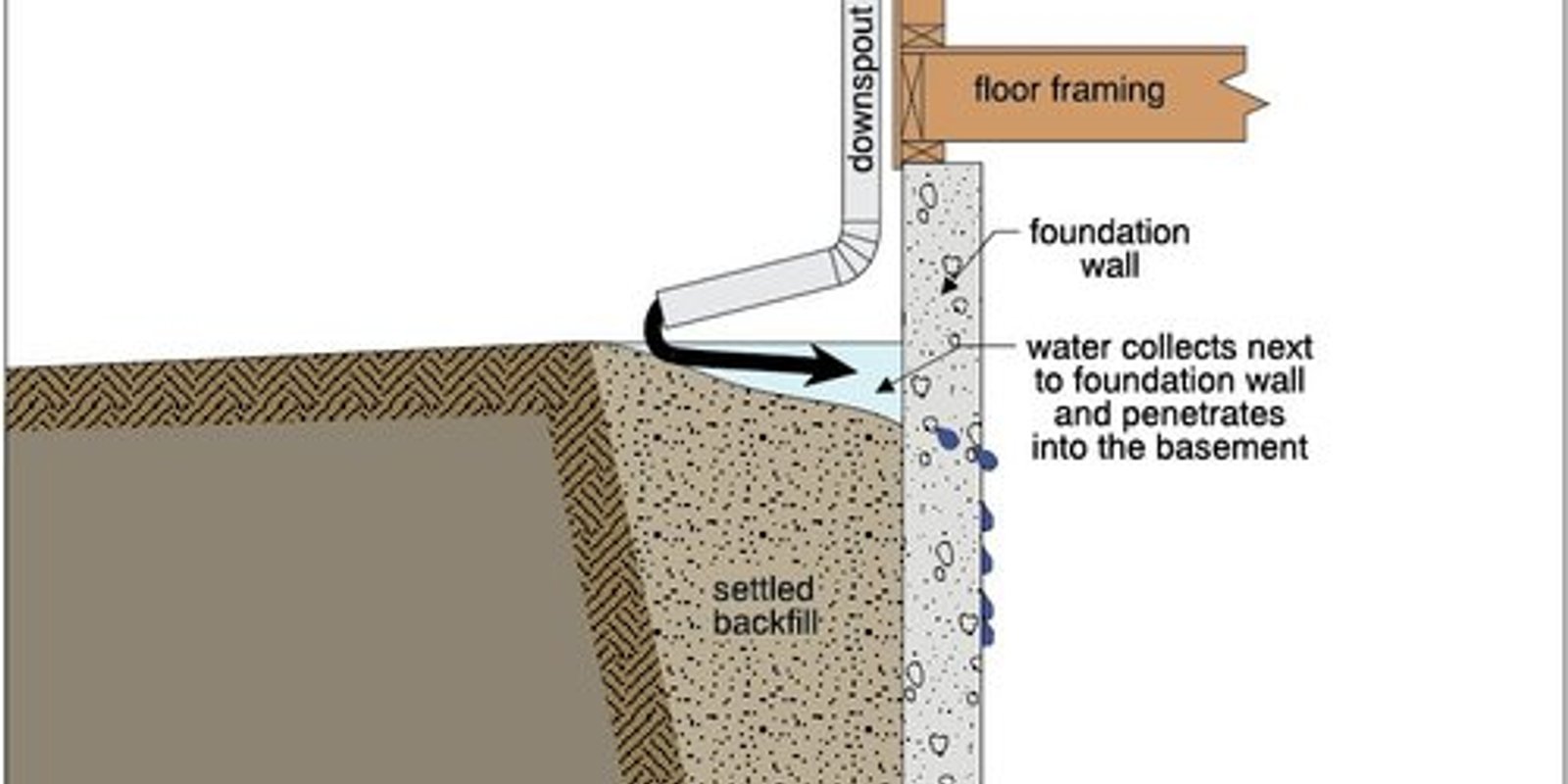
The soil placed around a new foundation can settle over time. This may create a depression beside the house even when the original grading passed inspection.
Water then flows toward the settled area rather than away from the building.
Settlement can also occur:
- Under stairs and decks
- Beside window wells
- Around utility penetrations
- Along recently excavated foundation walls
- Where loose fill was not compacted adequately
- At transitions between the house and patio
EPCOR notes that drainage problems may become visible after heavy rain, snowmelt, foundation settlement or nearby redevelopment. Some properties can perform acceptably for years before settlement or landscape changes expose a weak drainage route.
Blocked or Altered Swales
A swale is a shallow, sloped channel designed to move stormwater toward the street, alley or another approved drainage route.
Many homeowners mistake swales for awkward dips that should be filled. They add topsoil, install decorative rock, build a raised planting bed, place a shed across the route or flatten the area while installing sod.
The yard may look smoother afterward, but the drainage system has effectively been removed.
EPCOR advises homeowners not to cover swales with soil, rocks, shrubs or trees and not to change their designed shape or layout. Swales may be shared between neighbouring properties, which means altering one side can affect both homes.
Downspouts Discharging in the Wrong Location
A substantial amount of water can leave a roof during a heavy rain.
When a downspout ends beside the foundation, points toward a neighbour or releases water into a low side yard, it can overwhelm the surrounding soil. The resulting puddle may appear to be a grading problem even though roof runoff is the main source.
Downspouts should discharge toward an appropriate swale or another approved location and away from homes. Edmonton's Drainage Bylaw also restricts roof and foundation drainage from being released too close to buildings, neighbouring lots or City rights-of-way, or in a manner that creates a nuisance, hazard or damage.
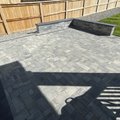
Patios and Walkways Changing the Flow
Concrete, paving stones and asphalt do not absorb water like soil and grass.
They collect rainfall and move it toward the lowest edge. If a patio slopes toward the house or releases water into a flat lawn, the surrounding area may receive more runoff than it can handle.
Drainage problems can also appear after:
- A patio is raised above the surrounding lawn
- A walkway blocks a swale
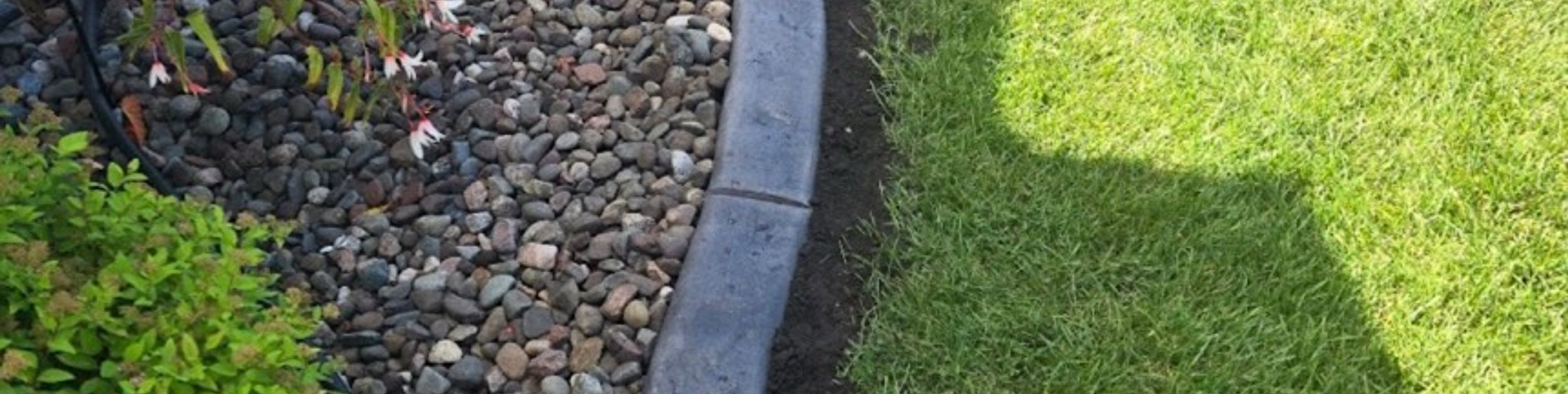
- New edging traps water
- A driveway directs water toward the garage
- Artificial turf is installed without proper base drainage
- A retaining wall interrupts the original flow path
Every new hardscape feature should be designed as part of the property's overall drainage system.
Neighbouring Construction or Grade Changes
Water does not recognize property lines. A new patio, addition, retaining wall, raised bed or grade change on one lot can affect the adjoining property.
The first step is usually to document when and where water appears and speak with the neighbour. The City recommends attempting to resolve drainage arrangements cooperatively before requesting a formal investigation. If the problem cannot be resolved, homeowners can contact 311 regarding possible Drainage Bylaw violations.
Understanding Edmonton's Residential Drainage Requirements
Drainage work should not be designed solely around making the yard look level. It should respect the lot-grading plan and preserve the intended flow of stormwater.
Slope Away From Foundation Walls
The City of Edmonton's August 2025 Residential Lot Grading Guidelines list a minimum 5 percent slope for two metres away from foundation walls on soft landscaped surfaces, along with a minimum 15-centimetre drop between the building and drainage swale.
Hard or impermeable surfaces have different requirements. The approved lot-grading plan and current City requirements should be reviewed before changing grades around a building.
This slope protects:
- Foundation walls
- Basement openings
- Window wells
- Weeping-tile systems
- Stairs and decks
- Exterior finishes near grade
Adding a small amount of loose soil beside the foundation is not enough if it washes away, remains uncompacted or creates a new problem at the outer edge.
Swale Requirements
Current City guidelines describe a drainage swale as a shallow, sloped linear depression that carries stormwater toward a City right-of-way.
For residential soft-surface swales, the guidelines currently specify:
- A minimum 1.5 percent longitudinal slope
- A minimum unobstructed width of 15 centimetres within each applicable property
- A minimum depth of 15 centimetres
Concrete swales use different minimum requirements. The approved lot-grading plan determines where the swale belongs and how it connects with the surrounding drainage pattern.
These measurements are useful, but drainage should not be redesigned from a general article alone. The actual lot elevations and neighbouring conditions still control the solution.
Property Owners Must Maintain Their Grades
Passing a final-grade inspection does not permanently transfer responsibility to the builder or City.
The City states that property owners are responsible for maintaining surface grades after approval. Repairs may be required if settlement, landscaping or later alterations create a drainage problem.
That means future projects should preserve drainage, including:
- Sod replacement
- Garden construction
- Fence installation
- Retaining walls
- Patios and walkways
- Deck stairs
- Sheds
- Artificial turf
- Decorative rock
- Raised planters
A project can be visually attractive and still create an expensive drainage failure. Landscaping, in one of civilization's recurring jokes, must obey gravity.
How to Diagnose Standing Water Before Choosing a Solution
A drainage assessment should answer four questions:
- Where is the water coming from?
- Why is it collecting here?
- Where should it go?
- Is the problem on the surface or below the surface?
Observe the Yard During Rain
A dry-weather inspection shows elevations and visible defects. A rainfall inspection shows how the system actually behaves.
Watch for:
- Water flowing from downspouts
- Runoff crossing patios or walkways
- Water entering from an adjoining lot
- Puddles forming at fence lines
- Water moving through or around a swale
- Overflow from garden beds
- Erosion along slopes
- Water collecting at the base of steps
- Areas that become saturated before the rest of the yard
Photographs and video taken during a storm can be extremely useful, especially when the contractor visits later under dry conditions.
Check the Foundation Perimeter
Walk around the entire home.
Do not inspect only the obvious wet area. Look beneath decks and stairs and behind shrubs where settlement can go unnoticed.
Check for:
- Soil sloping toward the house
- Depressions beside foundation walls
- Buried or low window wells
- Downspouts ending in low areas
- Decorative rock hiding settled soil
- Patio edges higher than the foundation grade
- Water staining or erosion
- Gaps beneath steps
The surface beneath decorative stone matters more than the appearance of the stone itself. Water passes through the rock and follows the soil grade below.
Identify the Intended Swale
Look along side yards, rear property lines and fences for a shallow channel.
A swale may be subtle. It does not need to resemble a ditch, but it should provide a continuous downhill route.
Check whether it has been interrupted by:
- Soil
- Mulch
- Landscape edging
- Fence posts
- Trees or shrubs
- Raised beds
- Sheds
- Play structures
- Patio extensions
- Utility work
- Settlement
If the swale disappears halfway across the yard, water will usually stop at the interruption.
Determine Whether the Problem Is Surface or Subsurface Water
Surface-water problems usually appear quickly during rain or snowmelt. The water visibly moves across the ground and collects in a depression.
Subsurface problems may leave the lawn soft, muddy or saturated even after surface puddles disappear. Water may seep from a slope or appear along an excavation line.
French drains and drain tile are better suited to intercepting shallow subsurface water. Surface regrading is usually better for visible runoff and low spots.
Some properties have both problems, which is why installing one drain after glancing at the puddle is not exactly a diagnostic triumph.
Yard Drainage Solutions for Edmonton Properties
Different drainage systems solve different problems.
| Solution | Best application | Does not solve |
|---|---|---|
| Downspout extension | Roof runoff ending near the home | Broad negative grade or subsurface seepage |
| Foundation regrading | Settled soil and water near foundation walls | Low areas across the entire yard |
| Full yard regrading | Incorrect elevations or widespread pooling | Deep foundation or sewer problems |
| Swale restoration | Blocked or flattened surface drainage route | Water with no suitable downhill outlet |
| Catch basin | Defined low spot collecting surface water | General saturation without a pipe outlet |
| Channel drain | Runoff from patios, walkways and driveways | Poor lawn grading away from the drain |
| French drain | Shallow subsurface water or persistent saturated strip | Negative surface grade and roof runoff |
| Rain garden | Controlled capture of runoff away from structures | Foundation drainage or poorly designed overflow |
| Retaining wall drainage | Water pressure and flow around elevation changes | Incorrect overall lot drainage |
Downspout Extensions and Roof-Runoff Corrections
Correcting a downspout can be one of the simplest drainage improvements.
The goal is to move roof water away from the foundation and toward an area that can safely receive it.
Depending on the property, this may involve:
- Repositioning an extension
- Adding a splash pad
- Directing water toward a swale
- Connecting to an approved buried drainage line
- Correcting a disconnected or damaged pipe
- Installing a rain barrel where appropriate
- Cleaning blocked eavestroughs
Downspout work should not simply move water from your foundation to your neighbour's yard. The destination matters as much as the extension.
Before changing a buried roof-drainage connection, confirm how the property was designed and whether EPCOR or City requirements apply.
Foundation Regrading
Foundation regrading corrects soil that has settled or slopes toward the building.
The work may include:
- Removing sod, rock or mulch
- Adding suitable soil beside the foundation
- Compacting the soil in controlled lifts
- Building the required slope away from the home
- Adjusting window wells
- Correcting downspout discharge
- Reinstalling sod or another finish material
The soil must remain below appropriate building openings and exterior finishes. Simply piling loose topsoil against the wall can create moisture and clearance problems.
A contractor should assess the building edge, window wells, steps and surrounding drainage route before adding material.
Full Yard Regrading
Full regrading is often the most reliable solution when standing water results from incorrect elevations across a larger area.
The process may involve:
- Removing existing sod and unsuitable material
- Confirming elevations and drainage directions
- Correcting the underlying base
- Adding or redistributing soil
- Rebuilding swales and low points
- Compacting and fine-grading
- Reinstalling sod, seed or another finish
The objective is not to make the entire yard perfectly flat. A functional yard contains subtle slopes that move water without making the lawn uncomfortable or visually uneven.
Regrading is especially appropriate when:
- Multiple areas collect water
- The yard slopes toward the home
- The property has settled
- A previous renovation changed elevations
- Sod was installed before drainage was corrected
- The existing swale no longer functions
- A patio or retaining wall must be integrated into the grade
Still Dealing With Standing Water in Your Yard?
Get a free on-site assessment and a drainage plan that fixes the grading behind the problem.
Swale Restoration
A damaged swale should generally be restored before an underground drain is added.
Restoration may involve:
- Removing fill, rock or landscape material
- Re-establishing the channel
- Correcting the longitudinal slope
- Repairing erosion
- Replacing damaged sod
- Adjusting adjacent grades
- Coordinating with the neighbouring property
- Clearing the outlet near the street or alley
EPCOR specifically advises keeping swales clear, directing downspouts toward them where appropriate and avoiding changes to their shape.
A grass swale can disappear visually once the sod establishes, but the drainage depression must remain.
Catch Basins and Area Drains
A catch basin is a collection box installed at a low point. Surface water enters through a grate and leaves through an underground pipe.
Catch basins work best where:
- Water already concentrates in one defined area
- Surface grading can direct water toward the grate
- A suitable outlet is available
- The grate remains accessible for cleaning
- The pipe can maintain continuous fall
Government drainage guidance describes catch basins as low-point collectors that connect to buried drainpipes and require a suitable outlet. A swale can be used to guide surface runoff toward the basin.
A catch basin is less effective when it is installed in a random part of a flat lawn. The surrounding grade still has to bring water to it.
Maintenance is also important. Leaves, mulch, grass clippings and sediment can block the grate or accumulate inside the basin.
Channel Drains for Patios and Driveways
A channel drain, sometimes called a trench drain, is a narrow grated trough that captures runoff from a hard surface.
It may be appropriate:
- At the edge of a patio
- Across a walkway
- At the bottom of a sloped driveway
- In front of a garage
- Between concrete and the foundation
- Where a hardscape interrupts surface flow
Federal flood-prevention guidance describes trench or channel drains as grated troughs used near patios, walkways and driveways to collect and redirect surface runoff. The grate must remain clear, and the system still needs an appropriate discharge route.
A channel drain should not be used to excuse a patio that slopes incorrectly. Where practical, correcting the hardscape slope may provide a more durable result.
French Drains and Drain Tile
A French drain is a gravel-filled trench containing a perforated pipe and filter fabric. Water enters through the surrounding aggregate and flows through the pipe toward a lower outlet.
French drains can help with:
- Persistent saturated soil
- Shallow subsurface seepage
- Wet strips beside slopes
- Water moving toward a retaining wall
- Areas where suitable surface slope cannot be achieved
- Waterlogged soil that remains wet after runoff has stopped
Federal guidance describes French drains as systems that manage surface or groundwater using a buried porous pipe installed with slope from a higher point to a lower point.
When a French Drain Works
A French drain works when:
- Water is entering the trench
- The pipe has continuous fall
- Filter fabric and aggregate limit soil intrusion
- The system reaches a suitable and lawful outlet
- The outlet remains accessible and functional
- The drain is positioned to intercept the actual water source
Subsurface-drainage guidance consistently emphasizes that an outlet is necessary. Without one, the trench may become underground storage that eventually fills and returns the water to the same yard.
When a French Drain Does Not Work
A French drain does not correct:
- Soil sloping toward the foundation
- A blocked property-line swale
- A downspout releasing beside the home
- A patio sloping in the wrong direction
- A completely flat site with no outlet
- Deep foundation leakage requiring weeping-tile work
- Sewer backup
- Runoff being redirected unlawfully onto another property
French drains are useful tools, but the landscaping world has turned them into a universal answer with roughly the same restraint people once showed installing hot tubs.
The drain should be selected because the water source requires subsurface collection, not because the phrase sounds reassuring.
Rain Gardens and Absorbent Landscaping
A rain garden is a shallow planted area designed to receive and temporarily hold runoff from roofs, driveways or other hard surfaces.
Rain gardens can:
- Slow runoff
- Allow some water to infiltrate
- Reduce erosion
- Support attractive planting
- Reduce the amount of water entering a storm system
- Add visual interest to a drainage plan
They should be positioned away from foundations and designed with an overflow route.
Edmonton's hard clay is not ideal as the primary growing medium for a rain garden because it absorbs water poorly. EPCOR recommends more absorbent loam or engineered soil mixtures for RainWise projects.
A rain garden should not be created by digging a depression in clay and hoping nature develops project-management skills. Soil, elevation, overflow and plant selection must work together.
Retaining Walls and Drainage
Retaining walls change elevations and can interrupt existing water movement.
A properly designed wall may need:
- Granular drainage material
- Filter fabric
- Drain pipe
- A defined outlet
- Waterproof protection where required
- An internal swale
- Proper surface slope above and below the wall
Edmonton's current Residential Lot Grading Guidelines include specific requirements for internal swales and retaining walls, particularly where differences in elevation occur between neighbouring properties. Walls exceeding 1.2 metres in height or attached to a house require engineered design under the current guidelines.
A fence, landscape edging board or stacked garden material is not a substitute for a properly designed retaining wall.
Drainage Beneath Sod and Artificial Turf
Neither sod nor artificial turf fixes drainage by itself.
Natural Sod
New sod follows the grade beneath it.
If installed over a low spot, it will retain the same low spot. If placed over compacted clay with no drainage route, the lawn may remain wet, root poorly and develop yellow or thin areas.
Before sod installation:
- Correct elevations
- Preserve swales
- Remove unstable material
- Install suitable topsoil
- Fine-grade the surface
- Confirm water can leave the area
- Test sprinkler coverage separately from storm drainage
Artificial Turf
Artificial turf requires an excavated and compacted granular base. The system should allow water to move through the turf and base without directing it toward the foundation or trapping it against hardscape.
Base depth, aggregate, compaction, edge details and outlets matter more than the surface's green appearance.
Where pets use the area, drainage and cleaning access become even more important.
Common Yard Drainage Mistakes
Adding Soil Only Where the Puddle Appears
Filling a low spot may move the puddle several metres away without fixing the drainage route.
The entire path from source to outlet must be considered.
Covering a Swale
Swales are often filled because homeowners dislike the depression.
That depression is performing a job. Filling it may trap water on both properties.
Installing a French Drain Without an Outlet
A perforated pipe does not make water disappear.
The drain must lead somewhere appropriate, and that destination must comply with local drainage requirements.
Using Decorative Rock to Hide Wet Soil
Rock may conceal mud, but it does not change the grade beneath it.
Water passes through and continues collecting on the soil below.
Installing New Sod Before Correcting Drainage
Replacing damaged grass without correcting the cause usually produces the same damage again.
Finish landscaping should follow drainage correction, not precede it.
Redirecting Water to a Neighbour
A contractor should never solve one property's drainage issue by creating a new problem next door.
Edmonton's Drainage Bylaw prohibits discharges that can cause nuisance, hazard or damage.
Blocking Drainage With a Patio or Raised Bed
Patios, planters, edging and retaining walls must be integrated into the full grade.
A feature placed across a swale can create pooling even when the workmanship of the feature itself looks acceptable.
Confusing Surface Drainage With Foundation Drainage
Water on the lawn and water entering the basement may be connected, but they are not always the same problem.
A damaged weeping-tile system, failed waterproofing or sewer backup may require a foundation contractor, plumber or EPCOR rather than a landscaper.
Who Should You Contact About Yard Drainage?
Different professionals solve different portions of a drainage problem.
Landscaping or Grading Contractor
Contact a landscaper or grading contractor for:
- Surface elevations
- Regrading
- Swale restoration
- Soil and sod replacement
- Downspout discharge planning
- Catch basins
- Landscape drains
- Patio transitions
- Retaining-wall integration
- Yard renovation
Alberta Land Surveyor
A surveyor can verify elevations and prepare a Residential Lot Grading Certificate where City approval or recertification is required.
Survey data is particularly valuable when:
- The approved grading plan is unclear
- Neighbouring elevations are disputed
- Major regrading is proposed
- A new-build lot has not received final approval
- Drainage changes involve critical design elevations
City of Edmonton
Contact 311 for:
- Lot-grading requirements
- Drainage Bylaw questions
- Possible bylaw violations
- Formal investigations after neighbour discussions fail
City lot-grading staff enforce requirements but do not act as landscape consultants or design urgent repairs. Homeowners still need an appropriate contractor or specialist to develop the solution.
EPCOR or a Plumbing Contractor
Contact EPCOR or a qualified plumber for:
- Sewer backup
- Main service-line concerns
- Sump-pump discharge
- Weeping-tile questions
- Buried storm or foundation service connections
- Suspected pipe blockages
EPCOR also currently offers an eligibility-based Flood Prevention Home Check-up service to help homeowners identify flood risks, although it does not replace a lot-grading assessment or provide an urgent drainage response.
Foundation or Waterproofing Contractor
Contact a foundation specialist when:
- Water enters the basement
- Foundation cracks are visible
- Moisture continues despite correct surface grading
- Exterior waterproofing may have failed
- Weeping tile requires excavation or replacement
Engineer
An engineer may be required for:
- Tall retaining walls
- Significant slopes
- Groundwater concerns
- Unstable soil
- Complex infill drainage
- Large changes between neighbouring elevations
- Drainage systems connected to structural work
How Much Does Yard Drainage Cost in Edmonton?
Yard-drainage pricing varies because the visible wet area does not reveal the amount of work underneath.
A minor downspout or local grade correction costs far less than removing an entire lawn, rebuilding swales and reinstalling sod.
Serene Landscaping's current published final-grading guide lists:
- Targeted drainage corrections: approximately $500 to $2,500
- Most residential grading projects: approximately $1,500 to $3,500
- Grading and sod combined: approximately $3,000 to $8,000
Complex excavation, retaining walls, tight access, large quantities of soil, underground drainage, hardscape removal or foundation work can increase the total substantially.
The main cost factors include:
- Size of the affected area
- Amount of excavation
- Equipment access
- Soil removal and disposal
- Imported fill or topsoil
- Survey requirements
- Sod replacement
- Pipe and basin length
- Number of outlets
- Existing patios and walkways
- Retaining walls
- Utility locations
- Foundation or waterproofing involvement
A useful quote should describe the cause, the proposed solution and the intended outlet. A vague line item reading "install drainage" is not a scope of work. It is a future disagreement wearing work boots.
How Long Does Yard Drainage Work Take?
A small correction may take one day.
A typical residential regrading project may take one to two days on site, while projects involving excavation, underground drains, hardscape reconstruction or retaining walls can take longer. Serene Landscaping currently lists one to two days as the typical on-site duration for many residential final-grading projects.
Additional time may be required for:
- Utility locates
- Surveying
- City inspection
- Material delivery
- Soil drying after heavy rain
- Sod delivery
- Concrete or paving work
- Retaining-wall construction
- Foundation repairs
The ground should not be graded while excessively wet or frozen. Working saturated soil can create compaction and an uneven finish.
When Is the Best Time to Fix Yard Drainage?
Late spring through early fall is generally the practical construction season for surface drainage and grading in Edmonton.
Spring is useful because snowmelt reveals where water travels. The ground must still be thawed and dry enough to support equipment without creating additional damage.
Summer provides more stable working conditions but may hide seasonal melt problems unless the homeowner has photographs.
Early fall can work well when there is enough time for sod or seed to establish before winter.
The best assessment often combines:
- Photos from spring melt
- Observations during heavy rain
- A dry-weather elevation inspection
- Information about previous renovations
How to Maintain Yard Drainage
A well-built system still requires basic maintenance.
Each Spring
- Remove snow from window wells and foundation edges where practical
- Clear leaves and debris from swales
- Check for settlement
- Inspect downspout extensions
- Look for winter damage around patios
- Clean drain grates
- Watch water movement during melt
The City recommends moving snow away from window wells, downspouts and foundation walls during melt so water has a path toward the intended right-of-way.
Before Heavy Rain
- Clean eavestroughs
- Confirm extensions are connected
- Clear catch basins
- Remove debris from swales
- Check that sump discharge is unobstructed
- Move loose landscape materials out of drainage routes
After Landscaping Work
Reinspect drainage after:
- Sod installation
- Fence construction
- Patio work / Paving stone installation
- Garden expansion
- Retaining-wall installation
- Utility excavation
- Tree planting
- Shed placement
Minor landscape changes can create major drainage interruptions when they occur at a critical elevation.
Frequently Asked Questions About Yard Drainage in Edmonton
Why does my Edmonton yard stay wet for days after rain?
The yard may contain a low spot, compacted soil, clay with poor infiltration, a blocked swale or no effective outlet.
Watch where the water enters during rainfall. If the water collects immediately on the surface, grading is likely involved. If the ground remains soft after surface water disappears, subsurface drainage or soil reconstruction may be necessary.
Will adding topsoil fix standing water?
Adding topsoil can fix a shallow depression when the surrounding drainage route already works.
It will not solve widespread negative grade, a blocked swale or a property with no outlet. Adding soil without checking the surrounding elevations can push water toward the home or neighbouring lot.
Does a French drain work in Edmonton clay?
A French drain can work in clay when it is positioned correctly and has continuous fall to a suitable outlet.
It should intercept water rather than simply sit beneath the wet area. Filter fabric, aggregate, pipe slope and outlet design are essential.
Is a French drain better than regrading?
Regrading is usually better for surface runoff and low spots.
A French drain is better for shallow subsurface water or situations where adequate surface grade cannot be achieved. Some properties require both.
Can I fill in the swale beside my fence?
You should not fill, block or change a swale without confirming the approved lot-drainage design.
Swales are designed to serve your property and may also serve the neighbouring property. EPCOR advises homeowners not to cover or alter them.
Who is responsible for water coming from a neighbour's property?
Each property owner is responsible for maintaining their own lot grading and complying with Drainage Bylaw 18093.
Begin by documenting the issue and speaking with the neighbour. If the issue cannot be resolved and you believe a bylaw violation exists, contact 311.
Why is water pooling after new sod was installed?
The sod may have been installed over a low area, compacted clay or an interrupted swale.
Sod follows the elevation underneath it. The surface may look smooth while the base still contains depressions.
Can lawn aeration fix poor drainage?
Aeration can improve water movement in mildly compacted soil.
It cannot change the direction of surface runoff, restore a blocked swale or correct a yard that slopes toward the house.
Should drainage be fixed before installing a patio?
Yes.
The patio elevation, base and slope should be coordinated with the complete yard-drainage plan. Installing the patio first can limit the available elevations and make later drainage correction more expensive.
Should drainage be fixed before installing sod?
Yes.
Grading, soil preparation and drainage routes should be completed before sod. Removing healthy new sod to repair the base is an entirely avoidable way to purchase the same lawn twice.
Is standing water near the foundation urgent?
Water beside the foundation should be investigated promptly, especially when it appears after ordinary rain rather than an extreme event.
Check downspouts, soil slope, window wells and signs of settlement. If water is entering the basement, contact an appropriate foundation or flood-prevention professional as well as a grading contractor.
Do I need City approval to regrade my yard?
The answer depends on the property, the extent of the changes and whether the work alters approved elevations, swales, drainage systems or City right-of-way.
Review the lot-grading plan and confirm requirements with the City before making major changes. New-build final-grade work normally requires an Alberta Land Surveyor certificate and City inspection.
Fix the Cause Before Rebuilding the Surface
A wet yard does not automatically need a French drain.
It needs a diagnosis.
For many Edmonton properties, the correct solution is restoring the surface system that should already be doing the work: positive grade away from the home, clear swales, controlled roof runoff and a continuous route toward the appropriate outlet.
Catch basins, channel drains and French drains are valuable when the site conditions call for them. They perform best as part of a complete drainage plan, not as isolated products installed wherever the puddle happens to be deepest.
Serene Landscaping provides final grading, yard regrading, drainage corrections, sod installation, landscape design, paving stones and retaining-wall construction throughout Edmonton and surrounding communities. Projects begin with a site assessment, a clear scope and approved pricing, with no upfront deposit required.
Contact Serene Landscaping for a free on-site assessment and a practical drainage plan for your property.
Get a Firm Price for Your Yard
Tell us what you're planning. We'll come out, look at the site and give you a free quote. Serving Edmonton, St. Albert, Sherwood Park and Spruce Grove.