




Published: October 2026 | Author: Serene Landscaping | Reading time: 8 min
A 250 sq ft paving stone patio in Edmonton costs about $8,750 – $11,250 installed. A plain concrete slab the same size runs about $2,750 – $4,500, and decorative concrete about $5,000 – $7,500.
So concrete is the cheaper check to write. The more useful question is which one costs less by the time you sell the house, and that depends on what our clay does to a patio every winter. This guide walks through the math, how each surface holds up here, and which one fits each part of your yard.
Price Check: What Each Surface Costs to Install
Installed prices in the Edmonton area for 2026, including excavation and base. These match our patio cost guide.
| Size | Paving stones ($35 – $45/sq ft) | Plain concrete ($11 – $18/sq ft) |
|---|---|---|
| 150 sq ft (small sitting area) | $5,250 – $6,750 | $1,650 – $2,700 |
| 250 sq ft (typical backyard patio) | $8,750 – $11,250 | $2,750 – $4,500 |
| 400 sq ft (20 x 20 patio) | $14,000 – $18,000 | $4,400 – $7,200 |
Decorative concrete with a pattern or colour sits in between at roughly $20 – $30+ per sq ft. Your own price moves with access to the backyard, the stone you pick, curves and steps, and how much digging the site needs.
The 20-Winter Math
Install day is one moment. The patio has to get through every winter after it.
Paving stones, built once. Over 20 years you top up the joint sand once or twice and maybe re-level a small spot. The stones you paid for are still the stones you are standing on.
Concrete, built twice. Poured patios here usually show cracking within 10–15 years. If yours needs to be broken out and re-poured once in 20 years, you pay for the slab twice, plus demolition and hauling the old one away.
Run it on a 250 sq ft patio:
- Plain slab poured twice: roughly $5,500 – $9,000 before removal costs. Still the cheapest option if a grey slab with some cracks is fine with you.
- Decorative slab poured twice: roughly $10,000 – $15,000 before removal costs. That is already past the price of pavers.
- Paving stones once: $8,750 – $11,250, plus small maintenance.
If you want the patio to look good for the whole time you own the house, pavers usually come out even or ahead. If you just need a hard, flat surface, plain concrete is hard to beat on price.
What Edmonton Clay Does Under a Patio
Most of the Edmonton region sits on clay that holds water. In fall that water freezes and the ground swells upward. In a chinook or in spring it thaws and drops again. This happens over and over between October and April, and it never happens evenly across a whole patio. The side near a downspout stays wetter. The side in shade stays frozen longer.
A concrete slab is one rigid piece. When one corner lifts more than another, the slab has nowhere to go, so it cracks. Control joints decide where the crack shows up. They do not prevent it.
A paver patio is hundreds of small pieces locked together by sand in the joints. When the ground moves slightly, the stones move with it and settle back down. Nothing breaks.
This is why the same patio that lasts forever in Vancouver can crack in five years here.
How We Build a Paver Base for Edmonton
The stones are the part you see. The base is the part that decides whether the patio stays flat. On every paver patio, we:
- Dig out 10–12 inches below finished height, removing topsoil and soft clay.
- Install 6–8 inches of Class II gravel in layers, compacting each layer with a plate compactor instead of dumping it all in at once.
- Slope the base away from the house so water runs off instead of sitting against your foundation.
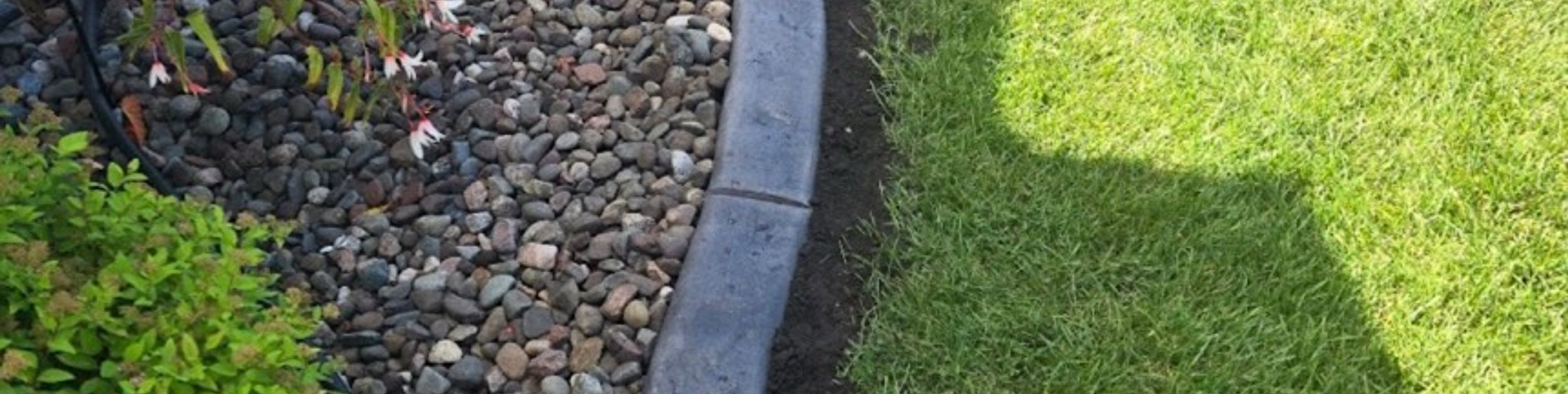
- Set edge restraints around the outside so the stones cannot creep outward.
- Screed bedding sand, lay the stones, cut the edges, and sweep in polymeric sand to lock the joints.
When two quotes for the same patio are thousands of dollars apart, the difference is almost always in steps 1 and 2. Ask every contractor how deep they dig and how many inches of gravel they compact.
See the Paver Number for Your Yard
We measure on site and give you a written paver price you can set beside any concrete quote.
Which Surface for Which Part of the Yard
You do not have to pick one material for the whole property. Most yards end up with a mix.
Front walkway and steps: pavers. It is the first thing people see, it gets salted every winter, and a lifted slab edge at the front door is a trip hazard.
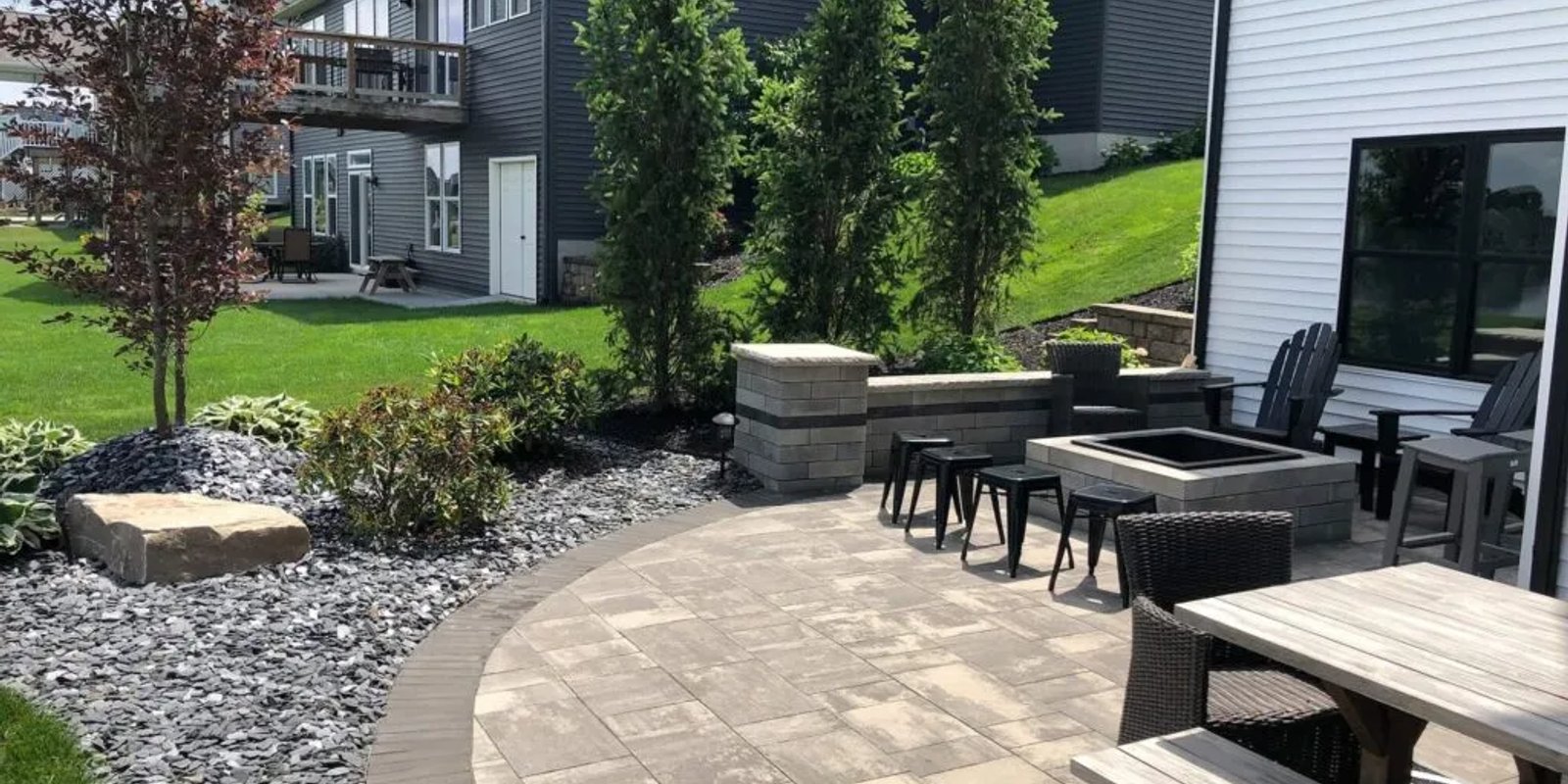
Backyard patio you will use for years: pavers. It is the biggest area, it carries furniture and a barbecue, and it often connects to steps, a fire pit or a retaining wall, all of which are easier to build in stone.
Hot tub or shed pad: concrete. A heavy object wants a flat, rigid base, and nobody looks at the pad once the tub is sitting on it.
Side yard path or pad behind the garage: concrete or gravel. Low traffic, nobody sees it, no reason to spend more.
A home you plan to sell within two or three years: usually concrete, unless the patio is part of how you plan to sell the house.
What Your Neighbourhood Changes
New-build lots in areas like Windermere, Secord, Rosenthal and Chappelle sit on fill that was moved around during construction. That fill keeps settling for a while. A slab poured on it too early is the classic way to get a crack in the first two years. Pavers handle a little settling far better, and the base work fits naturally with final grading if your lot is not done yet.
Established neighbourhoods like Heritage Hills and Lakeland Ridge in Sherwood Park or older parts of St. Albert bring mature tree roots and narrow side gates. Roots lift slabs and crack them. With pavers, a lifted section can be taken up, the root dealt with, and the same stones relaid. Tight access also means more hand work, which adds to the cost of either material, so measure your gate before you ask for quotes.
Front yards in neighbourhoods with high curb appeal, like Jensen Lakes or Erin Ridge in St. Albert, are where pavers earn their price twice: once in how they look, and again in how they still look after ten winters of salt.
The Honest Downsides of Pavers
Pavers are not perfect, and you should know where they fall short.
- Higher price on day one. Two to three times a plain slab.
- Joints need occasional attention. Polymeric sand wears down over the years. Topping it up every 8–12 years keeps weeds and ants out.
- A bad base ruins them. Pavers on 3 inches of gravel will dip and wobble within a few seasons. The stone is never the problem. The base is.
None of these are reasons to avoid pavers. They are reasons to choose who builds them carefully.
Fixing Each One
When a section of pavers sinks or lifts, the stones in that area come up, the base underneath is topped up and compacted, and the same stones go back down. With fresh joint sand, it is hard to find the spot afterward. The same goes for digging under the patio later for a gas line or a downspout extension.
When a slab cracks, you can fill the crack, which shows, or cut out the section and pour new concrete, which almost never matches the old colour.
Salt and De-Icers
Rock salt is hard on new concrete in particular. The surface can flake off in the first winter or two, and on decorative concrete the colour and pattern go with it. Concrete pavers are made dense and generally stand up to salt better. On any surface, use as little salt as you can and stick with a de-icer the manufacturer approves.
3-Year Workmanship Warranty, No Deposit
Every Serene Landscaping paving stone patio and walkway comes with a 3-year workmanship warranty covering base preparation, settling caused by the installation, and edge restraint integrity. No deposit is required to start, and your quote is written and itemized, so you can see exactly how deep the base is before you sign.
If you are also planning a wall, our retaining wall cost guide covers pricing, and our yard drainage guide explains how to keep water away from a new patio and your foundation.
Pavers vs Concrete FAQs - Edmonton
Is it cheaper to use pavers or concrete for a patio in Edmonton?
Concrete is cheaper to install. A plain slab runs about $11 – $18 per sq ft and pavers about $35 – $45 per sq ft. Over 20 years the gap shrinks, because poured patios here usually crack within 10–15 years and often need to be replaced, while a well-built paver patio only needs joint sand top-ups and the occasional re-level.
How much does a 20 x 20 paver patio cost in Edmonton?
A 20 x 20 patio is 400 sq ft. At $35 – $45 per sq ft installed, expect about $14,000 – $18,000, including excavation, a compacted gravel base, edge restraints and polymeric sand. Premium stone, curves, steps or tight backyard access push it higher. The same size in plain concrete is roughly $4,400 – $7,200.
What are the downsides of pavers?
The higher upfront price, joint sand that needs topping up every 8–12 years, and the fact that a thin or poorly compacted base will let them dip and wobble. With a proper 6–8 inch compacted gravel base, settling is rare, and when it does happen it is fixed by relaying the same stones.
Is stamped concrete cheaper than pavers in the long run?
Usually not. Stamped concrete costs less to install, but it cracks like any slab, and the pattern and colour wear where salt and foot traffic hit it. Paying for a decorative slab twice over 20 years generally costs more than building a paver patio once.
Do paving stones heave in an Edmonton winter?
Pavers on a shallow base can shift. With 6–8 inches of compacted Class II gravel, slope away from the house and edge restraints, they stay level through freeze-thaw. Because the stones are separate, any small movement can be corrected without breaking anything.
Can you put pavers over an existing concrete patio?
It can be done with thin overlay pavers if the slab is level and not badly cracked. It raises the surface, which can cause problems at door thresholds and with drainage toward the house. In most Edmonton yards, removing the old slab and building a proper gravel base lasts longer.
Get a Firm Price for Your Yard
Tell us what you're planning. We'll come out, look at the site and give you a free quote. Serving Edmonton, St. Albert, Sherwood Park and Spruce Grove.